
11 May 2026 · Flora Muijzer · 7 min read
Achilles tendinopathy: why your heel pain isn't going away and what to do about it
Persistent Achilles heel pain? Learn the common causes, how we assess and treat Achilles tendinopathy at Physio Flora in Marbella and Riviera del Sol, and three loading exercises to start today.
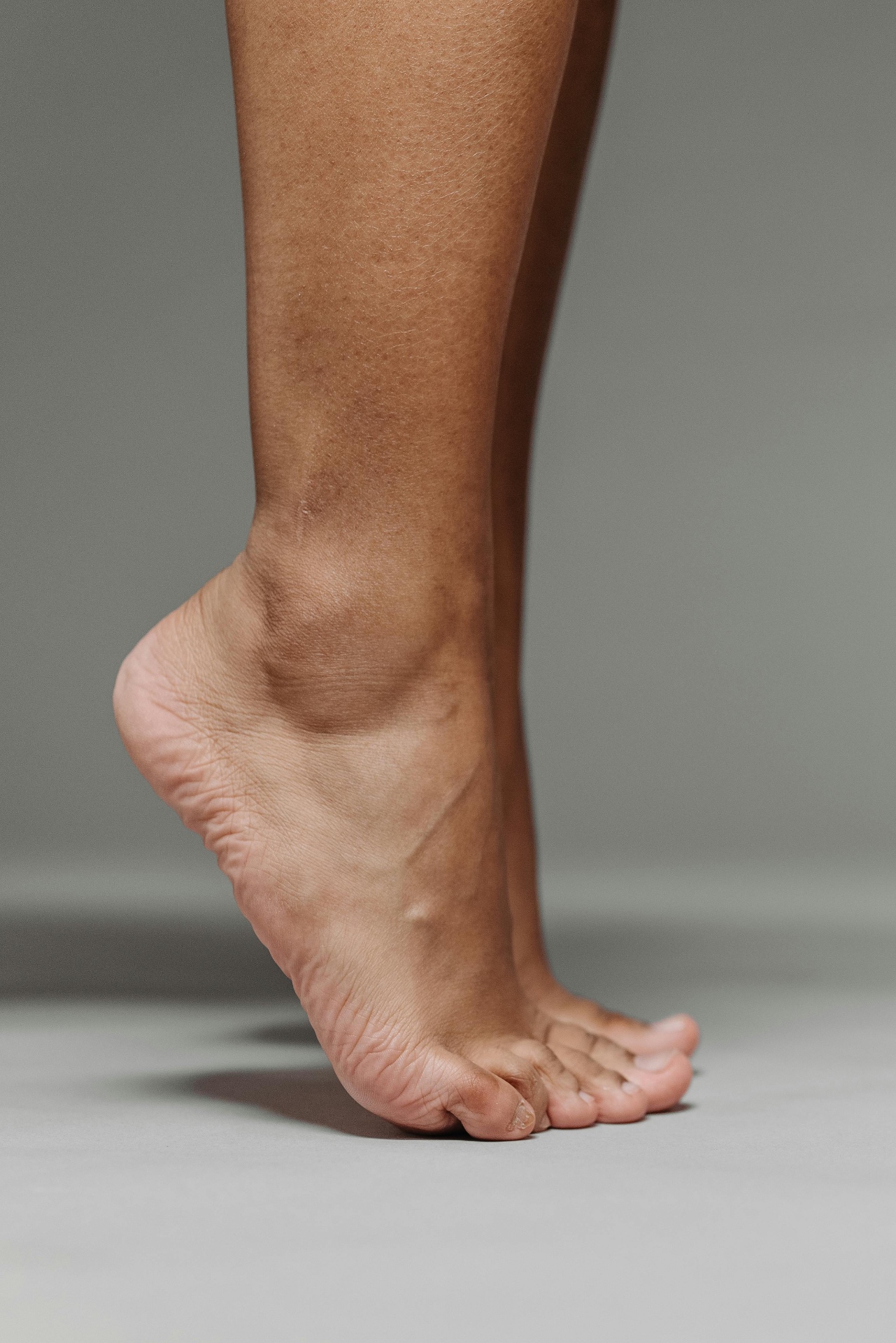
Your Achilles tendon is the strongest tendon in your body — and one of the most sensitive to overload. Physio Flora treats Achilles tendinopathy across Marbella, Riviera del Sol and the wider Costa del Sol.
It starts as a stiffness in your heel when you take your first steps in the morning. You think it will loosen up once you warm into your run, your padel match, or your ride. For a while, it does. Then, gradually, it doesn't. The pain begins to linger longer into your session, and eventually it shows up before you even get started.
Achilles tendinopathy is one of the most common overuse injuries in active adults — and one of the most frustrating. The good news is that, with the right approach, it responds very well to physiotherapy. Recovery is not only possible; it is expected.
What is Achilles tendinopathy and why does it happen?
Your Achilles tendon connects your calf muscles to your heel bone. It is the thickest and strongest tendon in your body, yet it is also remarkably sensitive to overload.
Tendinopathy is not the same as a tendon tear. Instead, it refers to a breakdown in the internal structure of the tendon when demand exceeds the tendon's capacity to recover. The result is pain, stiffness, and reduced load tolerance.
There are two main types:
Mid-portion Achilles tendinopathy affects the middle section of the tendon, roughly 2 to 6 centimetres above the heel bone. This is the most common type. It tends to respond well to progressive loading.
Insertional Achilles tendinopathy affects the point where the tendon attaches to the heel bone. This type requires a slightly different treatment approach and is often more stubborn.
Common causes of Achilles pain in runners, cyclists and racket sport players
Achilles tendinopathy rarely has one single cause. However, several contributing factors appear consistently in the patients we see at Physio Flora.
A sudden increase in training load is the most frequent trigger. For example, adding an extra run per week, increasing your weekly mileage, or returning to padel after a break puts more demand on the tendon than it can adapt to quickly.
Calf muscle weakness or tightness is another important factor. Because the calf muscles and the Achilles tendon work as a unit, weakness or restricted flexibility in the calf places higher stress directly on the tendon.
Changes in training surface or footwear also matter. Switching from soft to hard ground, or training in flatter shoes after years of running with a heel drop, can overload the tendon quickly.
In cyclists, a saddle that is too low, or cleats positioned too far forward on the shoe, forces the ankle into excessive flexion. As a result, the Achilles works harder with every pedal stroke.
In golfers and padel players, repeated explosive lateral movements and accelerations load the Achilles in ways that differ from straight-line running. Therefore, sport-specific assessment is essential.
How we assess Achilles tendinopathy at Physio Flora
A thorough assessment is the foundation of effective treatment. At Physio Flora, we do not rely on imaging alone. Instead, we assess the whole picture.
During your initial consultation, we evaluate:
- The location and behaviour of your pain (morning stiffness, warm-up pattern, pain with activity)
- Tendon palpation and provocation testing
- Calf strength and range of motion on both sides
- Your movement patterns, including walking, single-leg loading, and relevant sport-specific movements
- Your training history and recent changes in load
In some cases, we also use shockwave therapy assessment or refer for diagnostic ultrasound when the clinical picture warrants it. However, most cases are diagnosed confidently through clinical examination alone.
Physiotherapy treatment options for Achilles tendinopathy on the Costa del Sol
Effective treatment of Achilles tendinopathy requires patience and a structured, progressive approach. At Physio Flora, we combine several evidence-based methods to accelerate your recovery.
Progressive tendon loading with eccentric and heavy slow resistance exercises
This is the cornerstone of Achilles tendinopathy rehabilitation. Research consistently shows that tendons respond and adapt to progressive mechanical loading. We design a personalised loading programme that challenges the tendon appropriately at each stage — not too much, not too little.
Eccentric calf exercises, and particularly heavy slow resistance training, have strong evidence behind them. However, the exercises must be progressed correctly to avoid flare-ups.
Shockwave therapy for persistent Achilles tendinopathy
At Physio Flora, we offer radial shockwave therapy. This is a non-invasive treatment that delivers targeted acoustic pulses to the tendon. It stimulates blood flow, promotes tissue remodelling, and reduces localised pain. For mid-portion Achilles tendinopathy that has not responded to loading alone, shockwave therapy can be highly effective.
Manual therapy and soft tissue work
Restricted ankle mobility or tight calf muscles often contribute to tendon overload. Therefore, we use joint mobilisation (Mulligan manual therapy techniques), myofascial release, and sports massage to restore full movement and reduce muscle tension around the tendon.
Dry needling
In some cases, trigger points in the gastrocnemius or soleus muscles refer pain and tension into the Achilles region. Dry needling targets these points directly. As a result, it can reduce muscle tightness and support the loading programme.
Sports performance coaching and return-to-sport planning
For competitive and recreational athletes, the goal is always a full return to your sport. At Physio Flora, we hold an EXOS performance coaching licence. In addition to treating the tendon, we rebuild the strength, power, and movement quality your sport demands. This significantly reduces the risk of re-injury.
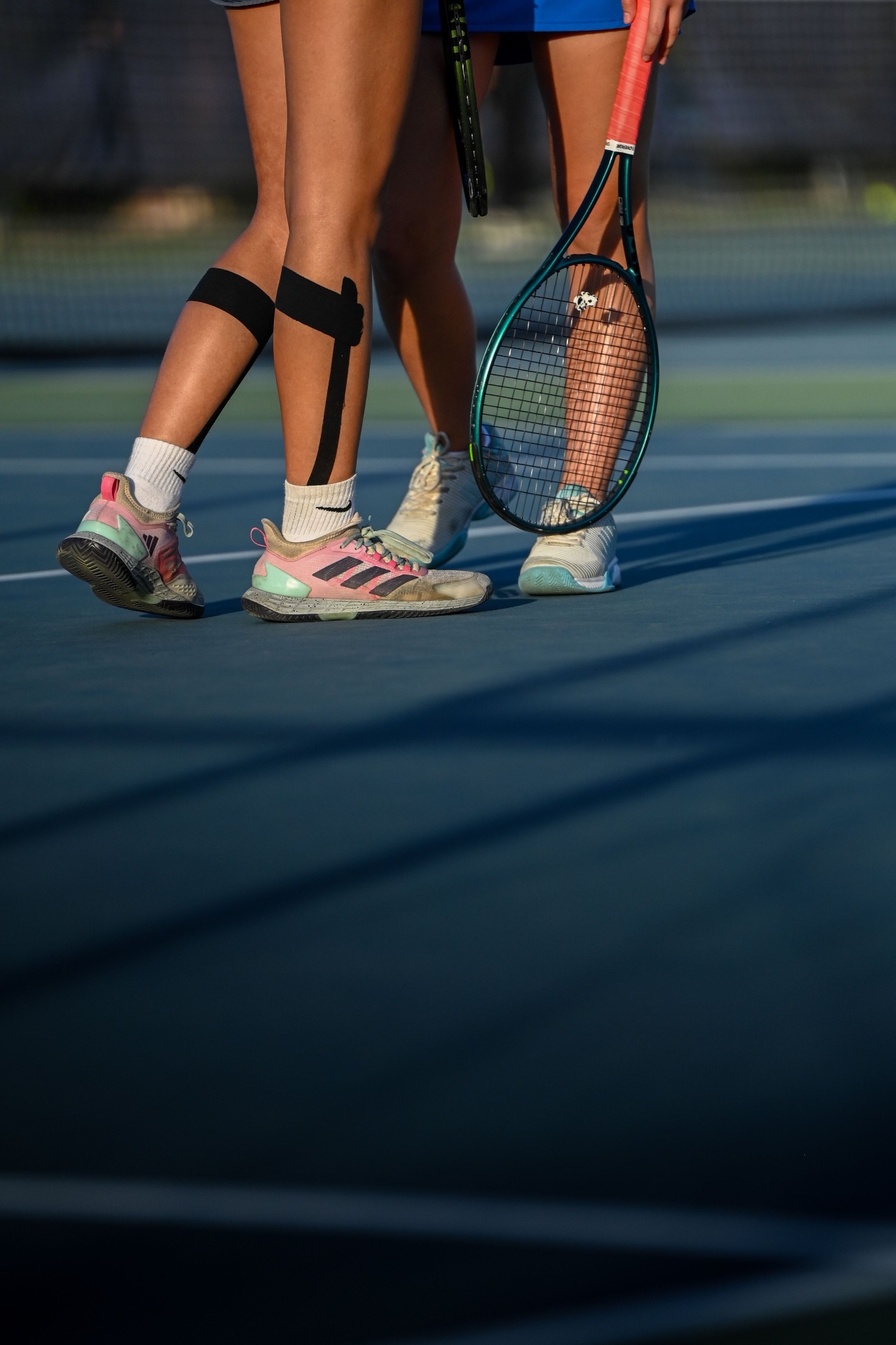 Racket sports place explosive, repeated loads on the Achilles tendon. A progressive loading programme prepares the tendon for the demands of your sport.
Three physiotherapist-approved exercises to start today
These exercises are appropriate for mild to moderate mid-portion Achilles tendinopathy. If you have insertional pain (right at the heel bone) or severe symptoms, please consult with us before starting. Drop exercises can aggravate insertional tendinopathy.
1. Isometric calf hold (pain relief and tendon calming)
How to do it: Stand on both feet. Rise onto your toes and hold the top position for 30 to 45 seconds. Perform 3 to 5 repetitions with a 2-minute rest between each.
Why it helps: Isometric contractions reduce pain in the tendon, often immediately. They are also an excellent way to load the tendon when it is too irritable for dynamic exercise. Therefore, this is often the starting point.
2. Double-leg eccentric calf raise (early-stage loading)
How to do it: Stand on both feet and rise up onto your toes. Then shift your weight to the affected leg and slowly lower your heel to the floor over 3 to 4 seconds. Complete 3 sets of 15 repetitions, once or twice daily.
Why it helps: The slow, controlled lengthening phase of the calf muscle (the eccentric phase) places load through the tendon in a way that drives adaptation. This is the best-evidenced exercise for Achilles tendinopathy.
3. Single-leg eccentric calf raise (progression)
How to do it: When double-leg raises become easy and pain is well-controlled, progress to single-leg. Perform the same slow-lower technique on the affected leg. Use a wall or chair for balance if needed.
Why it helps: This increases the demand on the tendon progressively. However, only progress when your pain during the exercise stays at 3 out of 10 or below, and settles quickly afterwards.
A note on pain during loading: Some discomfort during these exercises is acceptable and expected. Pain that spikes above 4 or 5 out of 10 during the exercise, or remains elevated the following morning, means you should reduce the load and contact us.
Questions our patients ask most about Achilles tendinopathy
Should I rest completely?
Complete rest is rarely the answer. In fact, it often makes the tendon more irritable when you return to activity. The key is to reduce load to a manageable level and then build it back progressively. We help you find that level.
Can I continue running or playing sport?
In many cases, yes — at a modified level. The goal is to find a load the tendon can tolerate and build from there. Total avoidance of all activity is usually not necessary and can delay recovery.
How long does it take to recover?
Mild cases can resolve in 6 to 8 weeks with consistent treatment. More chronic or severe cases may take 3 to 6 months. The single biggest factor in how quickly you recover is how consistently you follow your loading programme. We support you at every stage.
Will it come back?
Not if we address the underlying cause. Therefore, we do not just treat the tendon — we look at your training load, your movement mechanics, your calf strength, and your sport-specific demands. A complete rehabilitation programme significantly reduces the chance of recurrence.
Do I need an MRI or ultrasound?
Most cases do not require imaging for diagnosis. However, if there is uncertainty about the severity of the tendon, or if we want to rule out a partial tear, we will refer you appropriately.
Ready to get back on your feet?
Achilles tendinopathy does not have to become a long-term companion that derails your training. However, it does need the right approach from the start — progressive loading, addressing the root cause, and patience with the process.
At Physio Flora, we combine thorough clinical assessment with evidence-based treatment and a genuine understanding of the active, outdoor lifestyle that brings people to — and keeps people on — the Costa del Sol. We see patients from Riviera del Sol, Marbella, Fuengirola, Estepona, Benalmádena, Mijas Pueblo, and across the region.
No referral needed. English-language consultations. Same-week appointments for Achilles pain.
Book online · Contact the clinic · Ask the Expert
Physio Flora · English, Dutch, German and Spanish-speaking physiotherapy on the Costa del Sol · Specialising in sports injury rehabilitation, tendinopathy treatment, and performance recovery.