
6 July 2026 · Flora Muijzer · 6 min read
Ankle sprains: why they keep coming back on the Costa del Sol and how Mulligan therapy fixes it
Struggling with a recurring ankle sprain in Marbella or Mijas? Physio Flora offers Mulligan therapy, manual therapy and shockwave treatment for lasting recovery.
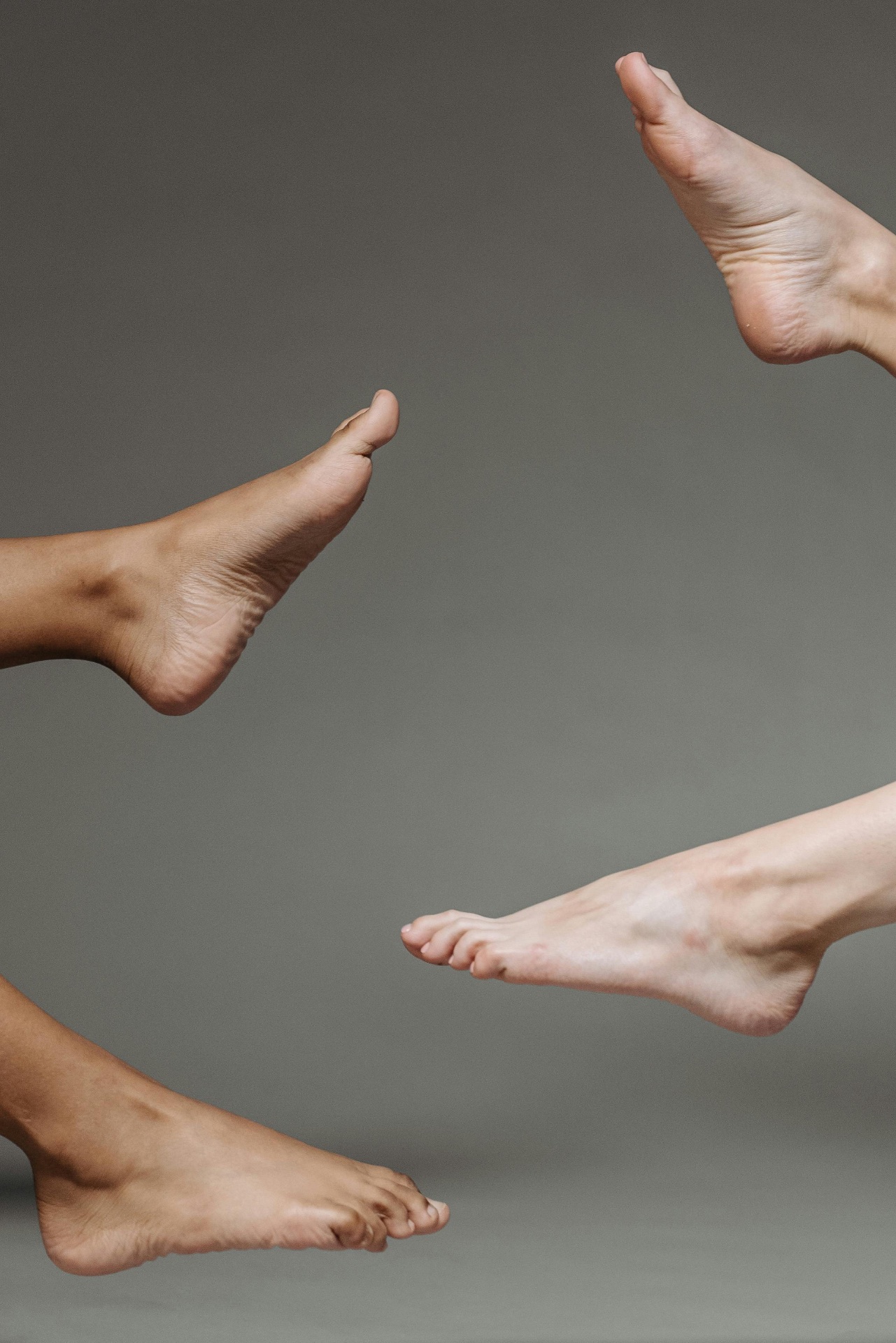
Ankle stability depends on a combination of joint mobility, ligament integrity and proprioception — all of which are tested on the courts and trails of the Costa del Sol.
It happens in a split second. You step off a curb on the cobbled streets of Marbella old town, land awkwardly after a smash on the padel court, or misjudge a rock on a hiking trail above Mijas Pueblo. Your ankle rolls, there is a sharp pull on the outside of the joint, and within minutes it is swelling.
This is a lateral ankle sprain, and it is one of the most common injuries we treat at Physio Flora. The good news is that, with the right rehabilitation, most ankle sprains heal fully and stop coming back for good.
In this guide, you'll find:
- The most common causes of ankle sprains on the Costa del Sol
- What actually happens inside the joint when you sprain your ankle
- Why the swelling and instability keep returning
- Our physiotherapy treatment options for ankle sprains, including Mulligan therapy
- Three physiotherapist-approved exercises to start today
- Answers to the questions our patients ask most
Why ankle sprains are so common on the Costa del Sol
The terrain here is beautiful, but it is not always forgiving. Marbella's old town and Riviera del Sol's pavements are lined with uneven cobblestones. Because of this, a distracted step is often all it takes to roll an ankle.
Padel and tennis add another layer of risk. Both sports demand sudden direction changes, lateral lunges, and quick stops on hard courts. As a result, the ankle's outer ligaments are placed under repeated strain, especially late in a match when fatigue sets in.
Hiking trails around Mijas, Benahavís, and Estepona bring a different challenge: uneven, rocky ground that tests balance with every step. In addition, many visitors switch from supportive trainers into sandals for the beach, which removes the stability their ankle relies on. Together, these factors explain why we see such a steady stream of ankle sprains throughout the year.
What actually happens when you sprain your ankle
Most ankle sprains involve the anterior talofibular ligament, or ATFL, on the outer side of the joint. This ligament stops the ankle from rolling too far inward. When it is stretched or torn, the surrounding joint capsule and small stabilising muscles are often affected too.
Sprains are graded from one to three. A grade one sprain involves mild stretching with little instability. A grade two sprain involves partial tearing, noticeable swelling, and some looseness. A grade three sprain means a complete tear, significant swelling, and considerable instability. However, the grade alone does not predict recovery. We have seen mild-looking sprains linger for months because the joint was never properly rehabilitated.
Why the swelling and stiffness keep coming back
This is the part most people get wrong. After the initial swelling settles, the ankle often feels "fine enough" to return to sport. Therefore, many people skip the rehabilitation phase entirely.
Unfortunately, this is exactly how chronic ankle instability develops. Two things typically go unaddressed. First, a small restriction often remains in the joint itself, particularly at the talus, which limits full range of motion even after the ligament has healed. Second, proprioception, meaning your ankle's sense of position in space, is disrupted by the injury and does not recover on its own.
As a result, the ankle keeps rolling on uneven ground, swelling flares up after activity, and confidence in the joint never fully returns. Around 40% of people who sprain an ankle go on to develop this kind of recurring instability. The encouraging news is that it is highly preventable with the right approach.
How we diagnose the root cause at Physio Flora
Every ankle assessment starts with a thorough history and a clinical examination. We test ligament integrity, joint range of motion, and single-leg balance. In addition, we assess how the ankle moves under load, since walking and standing tests often reveal restrictions that are invisible at rest.
Because I am trained in Mulligan Manual Therapy, I pay particular attention to whether a positional fault remains in the joint after the acute injury has settled. This is frequently the missing piece when a sprain "won't quite go away." We also screen the hip and knee, since compensation patterns further up the chain often follow an ankle injury.
Our physiotherapy treatment options for ankle sprains
Treatment depends on the stage of your injury and how long ago it happened.
Mulligan Mobilization with Movement. This is one of the most effective techniques for resolving the joint restriction left behind after a sprain. I apply a specific, pain-free glide to the ankle joint while you move it actively. This restores normal joint mechanics quickly, often within a session or two.
Manual therapy and joint mobilisation. For stiffness in the surrounding joints, hands-on mobilisation restores movement and reduces compensation elsewhere in the leg.
Dry needling. This helps release tight calf and peroneal muscles that tend to guard the injured ankle, which in turn improves movement and reduces pain.
Shockwave therapy. For sprains that have become chronic, or where ligament healing has stalled, shockwave therapy can stimulate tissue repair and reduce persistent pain.
Proprioceptive and balance retraining. This is the step most people skip, and the one that prevents re-injury. We progress balance work from simple single-leg standing through to sport-specific drills that mimic padel lunges or uneven trail terrain.
Sports performance and return-to-play planning. For padel, tennis, and hiking enthusiasts, we build a structured return that rebuilds confidence and capacity before you are back on court or on the trail at full intensity.
Three physiotherapist-approved exercises to start today
1. Ankle alphabet. Sit with your leg extended and trace the letters of the alphabet in the air with your big toe. This restores range of motion gently in the early stages of recovery.
2. Single-leg balance. Stand on the injured leg for 30 seconds, progressing to an unstable surface such as a folded towel once pain allows. This retrains the proprioception that a sprain disrupts.
3. Resisted eversion with a band. Loop a resistance band around your forefoot and push outward against it, working the muscles that stabilise the outer ankle. This directly targets the structures most vulnerable to re-injury.
If pain increases with any of these exercises, stop and book an assessment before continuing.
Answers to the questions our patients ask most
How long does an ankle sprain take to heal?
A grade one sprain often settles within two to three weeks. Grade two and three sprains can take six to twelve weeks to heal fully, and rehabilitation timelines vary from person to person.
Should I keep walking on a sprained ankle?
Gentle, pain-free movement is usually encouraged early on, rather than complete rest. However, this depends on the severity of your sprain, so it is worth having it assessed.
When can I return to padel, tennis, or hiking?
This depends on regaining full range of motion, strength, and balance, not simply on how many weeks have passed. A structured assessment gives you a realistic and safe timeline.
Do I need an X-ray?
Most ankle sprains do not require imaging. We use established clinical rules during assessment to identify the small number of cases where a fracture needs to be ruled out.
Ankle sprains do not have to become a recurring problem every season.
At Physio Flora, we combine thorough clinical assessment with evidence-based treatment and a genuine understanding of the active, outdoor lifestyle that brings people to, and keeps people on, the Costa del Sol. We see patients from Riviera del Sol, Marbella, Fuengirola, Estepona, Benalmádena, Mijas, Calahonda, Elviria, and Benahavís, and home visits are available on request.
No referral needed. Consultations in English, Dutch, German and Spanish. Same-week appointments available.
Physio Flora · English, Dutch, German and Spanish-speaking physiotherapy on the Costa del Sol · Specialising in Mulligan Manual Therapy and sports injury rehabilitation