
30 March 2026 · Flora Muijzer · 9 min read
Knee pain on the Costa del Sol: causes, diagnosis & physiotherapy treatment
Struggling with knee pain on the Costa del Sol? Discover the most common causes, how we diagnose them, and how Physio Flora treats knee pain in Marbella & Riviera del Sol — no referral needed.
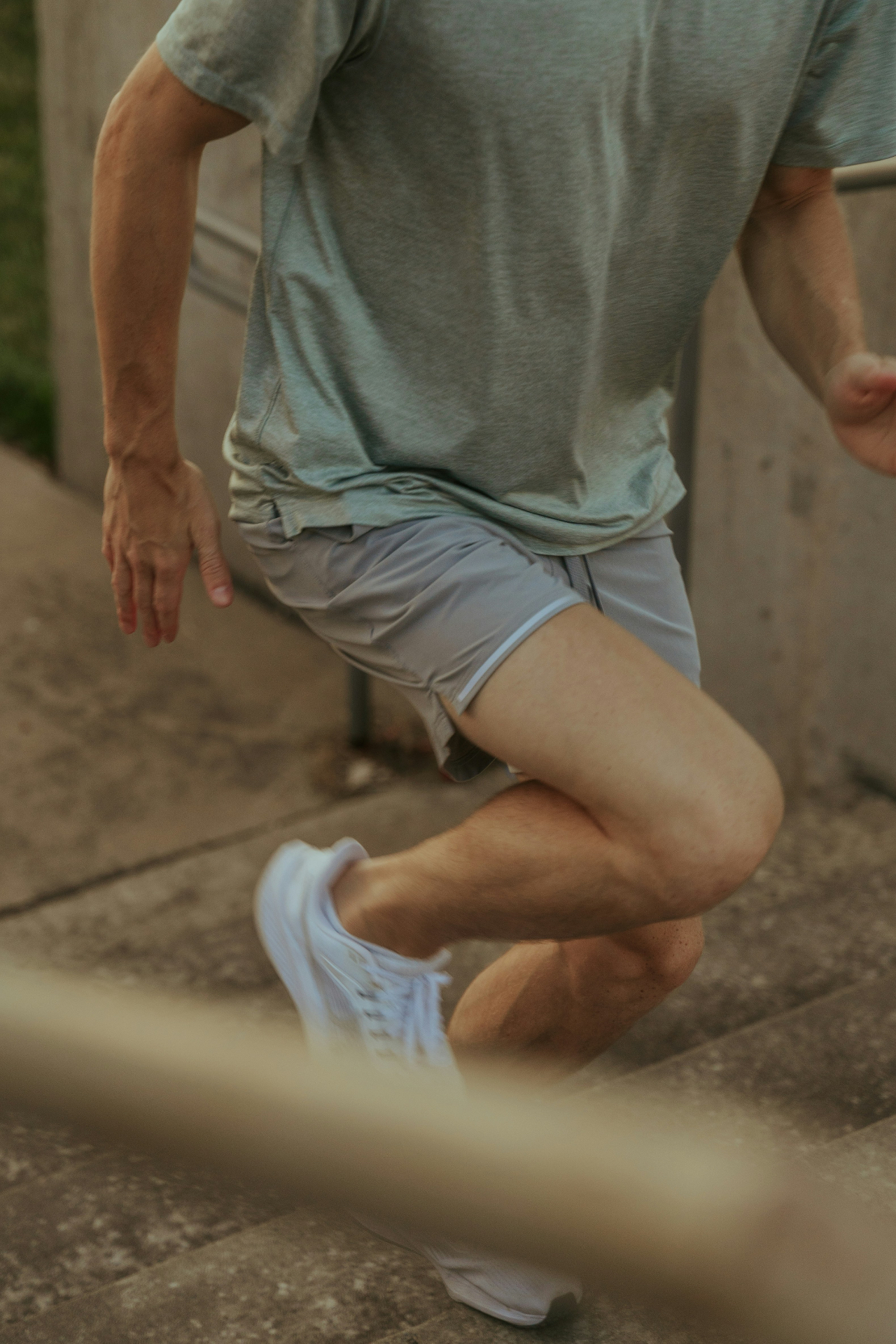
Stairs, hills and coastal paths are where knee pain shows up first — and where physiotherapy at Physio Flora makes the biggest difference.
Knee pain on the Costa del Sol: causes, diagnosis & physiotherapy treatment
Physiotherapy treats most types of knee pain without surgery or medication. Whether your pain came on suddenly during sport, crept up gradually over months, or returned after years of being manageable, understanding the cause is the essential first step — and that is exactly what we do at Physio Flora, with clinics in Marbella and Riviera del Sol.
It starts as a niggle on the stairs. Then it's there on the morning walk along the promenade. Before long, it's affecting your golf swing, your padel game, or simply the pleasure of exploring the white villages above Mijas on foot. Knee pain has a way of quietly taking over — and yet it is one of the conditions that responds best to physiotherapy when treated correctly.
In this guide you'll find the most common causes of knee pain and how to tell them apart, how we diagnose the root cause at Physio Flora, our physiotherapy treatment options, three physiotherapist-approved exercises to start today, and answers to the questions our patients ask most.
Common causes of knee pain
The knee is the largest joint in the body and one of the most mechanically complex. It absorbs enormous forces during everyday activity — walking, climbing stairs, standing up from a chair — and exponentially more during sport. Understanding what is causing your pain is fundamental to treating it effectively.
- Osteoarthritis — the most frequently diagnosed cause of knee pain in adults over 50, and particularly prevalent among the expat community on the Costa del Sol. Often described as "wear and tear," it involves gradual breakdown of the cartilage that cushions the joint. Morning stiffness that eases after 20–30 minutes is a classic sign. Importantly, the degree of arthritis visible on an X-ray does not always correlate with the level of pain.
- Patellofemoral pain syndrome — commonly known as runner's knee. Pain at the front of the knee, around or behind the kneecap, aggravated by stairs, squatting, kneeling, and prolonged sitting. It affects far more than just runners: cyclists, hikers on the hillside trails above Mijas, and anyone whose training load has recently increased are all susceptible.
- Meniscus tears — either acute (a twisting movement during football, padel, or skiing) or gradual with age. Typically causes pain on the inner or outer joint line, swelling, and sometimes a locking or catching sensation. Physiotherapy is highly effective for many meniscus tears.
- IT band syndrome — sharp or burning pain on the outer side of the knee, particularly during running or cycling. Closely associated with the sloped terrain and cambered paths along the coastline, and almost always driven by training load and hip weakness.
- Ligament injuries — most commonly the ACL or MCL, causing acute pain, swelling, and instability after contact sport or a sudden change of direction. Physiotherapy is central to recovery whether the path is surgical or conservative.
- Bursitis — inflammation of the small fluid-filled sacs that cushion the knee (prepatellar over the kneecap, pes anserine on the inner knee). Both respond well to targeted physiotherapy.
- Tendinopathy — particularly patellar tendinopathy (pain just below the kneecap), common in athletes who jump, sprint, or lunge repeatedly. Now understood as a degenerative, load-related condition rather than an inflammatory one — which changes the treatment approach entirely.
How do we diagnose the cause of your knee pain?
Imaging alone — X-rays and MRI scans — does not tell the full story. Structural findings on a scan need to be interpreted in the context of your symptoms, your movement patterns, your history, and your goals. A clinical assessment by an experienced physiotherapist is the most meaningful starting point.
At Physio Flora, your initial appointment includes:
- A detailed clinical history — when the pain started, what makes it better or worse, how it affects your daily life and sport, and whether there was a specific trigger or a gradual onset.
- Movement and strength testing — assessing how your knee moves, where in the range pain occurs, how strong the surrounding muscles are, and whether movement patterns in the hip, ankle, and foot are contributing.
- Special orthopaedic tests — hands-on clinical tests that help identify specific structures: menisci, ligaments, patellofemoral joint, and bursae all have validated tests that give us diagnostic confidence.
- Referral for imaging when needed — if an X-ray or MRI would provide clinically useful information, we advise you on where to access this locally. We also work collaboratively with local traumatologists in Marbella and Málaga when a second opinion or surgical assessment is warranted.
You do not need a referral or a doctor's letter to book an appointment. We can assess you, begin treatment, and coordinate any further investigations from within the clinic.
Physiotherapy treatment options for knee pain
Treatment at Physio Flora is always tailored to the individual — the diagnosis, the severity, your lifestyle, and your goals. There is no one-size-fits-all approach to the knee.
- Manual therapy and joint mobilisation — improve the mechanics of the knee itself, restoring range of movement, reducing stiffness, and decreasing pain. For osteoarthritis in particular, mobilisation can provide significant relief and is safe at any stage.
- Quadriceps and hip strengthening — one of the most evidence-based interventions for knee pain of almost any cause. Weakness in the quads and hip abductors places increased stress on the joint and alters kneecap tracking. A structured, progressive strengthening programme is central to almost every knee rehabilitation plan we design.
- Dry needling and trigger point therapy — address muscle tension in the quadriceps, hamstrings, calf, and iliotibial band that contributes to abnormal forces across the knee.
- Electrotherapy — including therapeutic ultrasound and TENS, to reduce pain and facilitate tissue healing, particularly in the early stages of bursitis, tendinopathy, and post-surgical recovery.
- Taping and bracing guidance — kinesiology tape applied around the kneecap is highly effective for patellofemoral pain and can provide immediate symptom relief. We also advise on off-the-shelf bracing options for ligament instability and osteoarthritis.
- Post-surgical rehabilitation — whether you have had a knee replacement (total or partial), ACL reconstruction, or meniscus repair, the quality of your rehabilitation is the single biggest determinant of your outcome. We design structured, milestone-based programmes and work closely to the operating surgeon's timeline and protocols.
- Activity modification and return-to-sport planning — for golfers, padel players, and runners, this includes sport-specific movement analysis and a progressive return-to-training plan.
3 physiotherapist-approved exercises for knee pain
These exercises are appropriate for most types of knee pain and can be started at home. Move within a comfortable range — pushing into significant pain is counterproductive. If your pain is severe or the cause is unknown, book an assessment before beginning.
1. Seated leg extensions (low resistance)
Sit in a firm chair with both feet flat on the floor. Slowly straighten one leg until it is fully extended, hold for 3 seconds, then lower slowly. Keep the movement controlled throughout — particularly on the way down. Complete 3 sets of 12–15 repetitions on each leg. This activates the quadriceps without placing compressive load on the joint, making it safe for most presentations including osteoarthritis.
2. Wall sit (shallow range)
Stand with your back flat against a wall, feet hip-width apart and about 30 cm from the wall. Slowly slide down until your knees are bent at approximately 30–45 degrees — do not go below 90 degrees unless instructed. Hold for 20–30 seconds, then slide back up. Repeat 3–5 times. This builds quadriceps and glute endurance, which directly reduces load through the knee during daily activities.
3. Straight leg raise
Lie on your back with one knee bent (foot flat on the floor) and the other leg straight. Tighten the quadriceps of the straight leg, then raise it to the height of the opposite knee. Hold for 2 seconds, lower slowly. Complete 3 sets of 15 repetitions on each side. This strengthens the quadriceps without bending the knee at all — ideal in the early stages of recovery from surgery, meniscus issues, or significant osteoarthritis.
Important: these exercises address the most common contributory factors to knee pain, but they are not a substitute for diagnosis. Some causes — acute ligament tears, fractures, infection, or referred pain from the hip — require a different approach entirely. If you are unsure, book an assessment first and we'll tell you exactly what is appropriate for you.
Frequently asked questions
Can physiotherapy help with knee osteoarthritis in Spain?
Yes — and the evidence strongly supports it. Exercise therapy and manual physiotherapy are first-line, guideline-recommended treatments for knee osteoarthritis, consistently shown to reduce pain, improve function, and delay the need for surgery. Physiotherapy does not reverse the structural changes, but it significantly reduces their impact on your daily life. Many patients considering knee replacement achieve enough improvement through physiotherapy to postpone or avoid surgery altogether.
How many physiotherapy sessions will I need for knee pain?
This varies with the cause and duration. Acute presentations such as a recent ligament sprain or post-surgical rehabilitation follow structured timelines — we can give you a realistic roadmap at your first appointment. Chronic conditions such as osteoarthritis or tendinopathy often show meaningful improvement within 6–8 sessions, with an ongoing home exercise programme maintaining progress thereafter.
Is there an English-speaking physiotherapist for knee pain near Marbella?
Yes. Physio Flora is based in Riviera del Sol, conveniently located between Fuengirola and Marbella. All consultations, exercise programmes, and follow-up communication are in English. We have extensive experience with the international community across the Costa del Sol and understand the specific challenges of managing health conditions as an expat in Spain.
Can physiotherapy help me avoid knee surgery?
In many cases, yes. For knee osteoarthritis, meniscus tears, and patellar tendinopathy in particular, physiotherapy is a highly effective alternative to surgery — and carries none of the surgical risks. The key is committing to the rehabilitation programme fully. Where surgery is genuinely the best option, we will tell you honestly and help you prepare for — and recover from — the procedure.
Do you offer post-knee-replacement rehabilitation on the Costa del Sol?
Yes, this is an important part of our practice. Post-knee-replacement rehab follows a structured, phased protocol and is the single most important factor in determining your final level of function. We work to the timeline and protocols set by your surgeon, and provide detailed progress reports for the surgical team and your insurance provider if required. Many patients travelling to Spain for surgery — or recovering here after surgery performed in the UK or elsewhere — come to us for their rehabilitation.
What is the difference between a physiotherapist and a traumatologist for knee pain?
A traumatologist (orthopaedic surgeon) is a medical specialist who diagnoses and treats musculoskeletal conditions with a focus on whether surgical intervention is needed. A physiotherapist specialises in non-surgical assessment, rehabilitation, and management of movement and function. For most knee pain, a physiotherapist is the right first step. If surgery is indicated — or needs to be ruled out — we refer you to a trusted traumatologist locally and work alongside them throughout your care.
Take the first step towards pain-free movement
Knee pain does not have to limit your life on the Costa del Sol. Whether it's stopping you from playing golf, walking the coastal paths, enjoying the steps of your hillside villa, or keeping up with the grandchildren — expert physiotherapy can help, often more quickly than you expect.
At Physio Flora we combine thorough clinical assessment with evidence-based treatment and a genuine understanding of the active, outdoor lifestyle that brings people to — and keeps people on — the Costa del Sol. We see patients from Riviera del Sol, Marbella, Fuengirola, Estepona, Benalmádena, Mijas Pueblo, and across the region.
No referral needed. English-language consultations. Appointments available this week.