
18 May 2026 · Flora Muijzer · 6 min read
Padel elbow: why this padel injury is so common on the Costa del Sol and how to treat it
Padel elbow (lateral epicondylalgia) is the most common padel injury. Learn the causes, how we diagnose it at Physio Flora in Marbella and Riviera del Sol, and three exercises to start today.
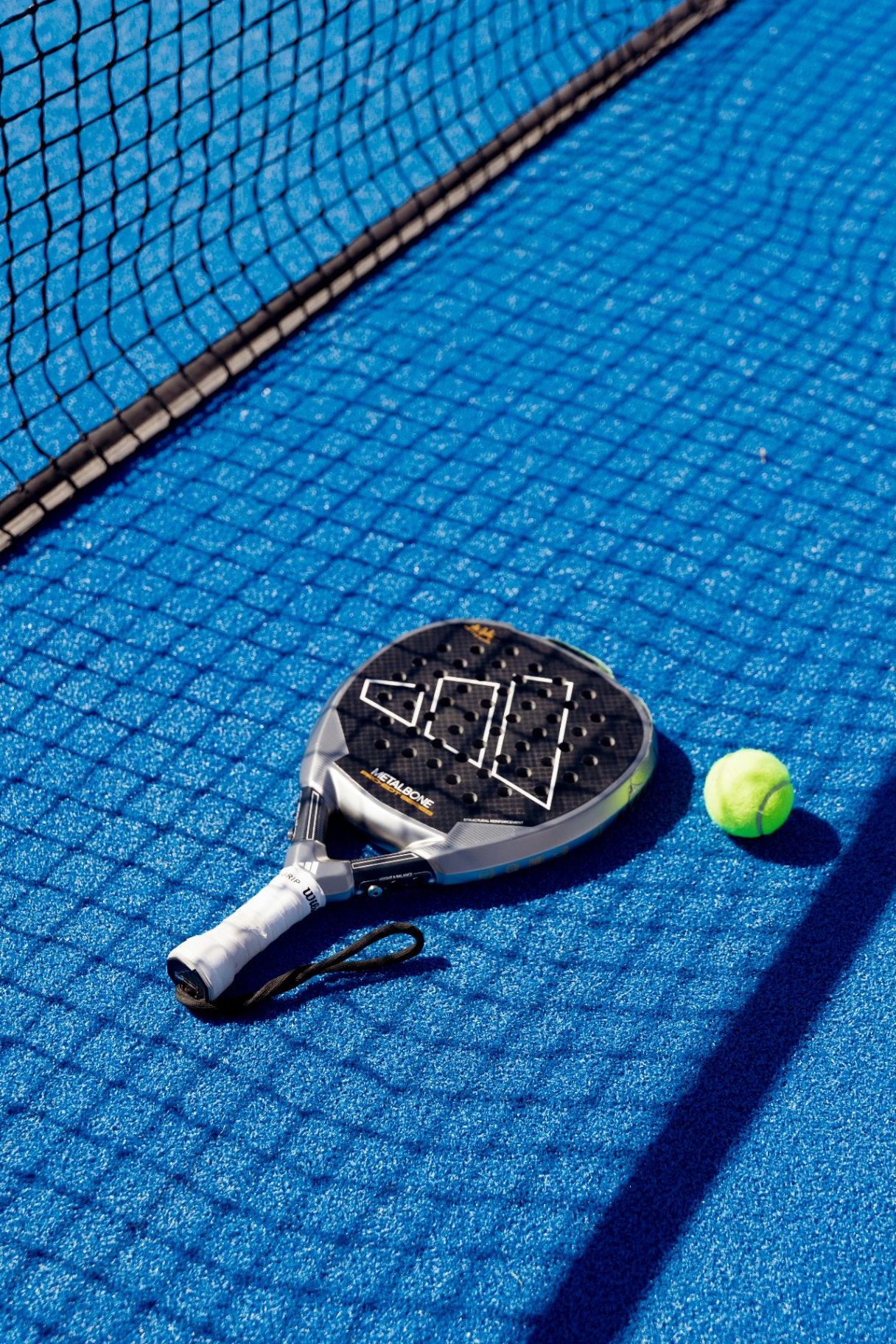
Modern padel rackets are stiff and powerful. Off-center hits send vibration straight through the forearm — a major driver of padel elbow.
Reading time: approx. 6 minutes
It starts as a dull ache on the outside of your elbow after a long padel session. You shake it off, ice it, and book another court for the weekend. Then one day the ache is there before you even pick up the racket, and gripping your coffee cup hurts too.
This is padel elbow, and you are far from alone. Research shows the elbow is the single most injured area in padel, accounting for roughly a third of all injuries in the sport. The good news is that, with the right physiotherapy plan, it responds well to treatment and full recovery is realistic.
What is padel elbow and why padel causes it
Padel elbow is a form of lateral epicondylalgia. This means the tendons on the outside of your elbow become irritated and painful. It is the same family of injury as tennis elbow. However, the way padel loads the arm makes it especially common among players on the Costa del Sol.
Padel has exploded in popularity here, with new courts opening across Marbella, Mijas, Fuengirola, and Estepona every year. As a result, more players of all levels are picking up a racket without building up tolerance gradually. This sudden jump in playing frequency is one of the biggest drivers of padel elbow.
Common causes of padel elbow on the Costa del Sol
- Using the wrist instead of the body on smashes. Many players snap the wrist on the bandeja or remate instead of rotating through the shoulder and trunk. This overloads the forearm extensor tendons.
- Off-center hits. Padel rackets are stiff and solid, so a mistimed shot sends vibration straight through the arm rather than absorbing it.
- The wrong racket or grip size. A racket that is too heavy, too stiff, or has the wrong grip diameter increases strain with every shot.
- A sudden increase in playing frequency. Weekend warriors who go from once a week to several sessions often develop symptoms within weeks.
- Limited forearm and shoulder strength. Without enough conditioning, the tendons absorb load that the muscles should be sharing.
Because of this combination of factors, padel elbow tends to develop gradually rather than from a single bad shot. Most patients describe weeks of low-level discomfort before it becomes a daily problem.
How we diagnose the root cause at Physio Flora
When you come in with elbow pain, we start with a thorough clinical assessment rather than jumping straight to treatment. This typically includes:
- Palpation and movement testing to confirm the exact tendons involved.
- Resisted wrist extension testing, which reproduces the pain in genuine cases of padel elbow.
- Grip strength assessment, since grip strength often drops noticeably on the affected side.
- A look at your technique and equipment, including racket weight, grip size, and your smash and volley mechanics.
- A check of the shoulder and trunk, since weakness further up the chain often forces the elbow to absorb extra load.
This assessment matters because padel elbow can sometimes mimic nerve irritation or referred pain from the neck. As a result, ruling out these other causes early helps us build a treatment plan that actually works, instead of treating the wrong problem.
Our physiotherapy treatment options for padel elbow
Treatment at Physio Flora is tailored to how long you have had symptoms and how irritated the tendon currently is. In addition, we always look beyond the elbow itself to the technique and strength factors driving the problem.
Manual therapy and Mulligan mobilisation
As a certified Mulligan therapist, Flora uses mobilisation with movement techniques that are specifically well-studied for lateral epicondylalgia. This approach often reduces pain immediately during the session, which allows you to start loading the tendon sooner.
Dry needling
Targeted dry needling of the forearm extensor muscles helps release the tightness that frequently builds up around an irritated tendon.
Shockwave therapy
For padel elbow that has become chronic and has not responded to rest, shockwave therapy stimulates the tendon''s own healing response. This is often the turning point for players who have been struggling for months.
Sports massage
Releasing tension through the forearm, wrist extensors, and upper arm supports the other treatments and improves comfort between sessions.
Progressive strength and technique guidance
We build a graded loading programme for the tendon while also addressing the swing mechanics or equipment choices that caused the overload in the first place. This combination is why our patients tend to stay pain-free, rather than seeing symptoms return after a few more matches.
 Repeated matches in the Costa del Sol sun place real load on the forearm and elbow — the most injured area in padel.
Three physiotherapist-approved exercises to start today
Try these gently, and stop if any exercise sharply increases your pain.
1. Isometric wrist extension hold
How to do it: Rest your forearm on a table with your hand hanging off the edge, palm down. Push the back of your hand upward into a light resistance band or your other hand, and hold for 30 to 45 seconds. Repeat four times.
Why it helps: Isometric holds calm an irritated tendon and often reduce pain immediately, making this a safe starting point even when the elbow is still sore.
2. Eccentric wrist extension
How to do it: Hold a light dumbbell with your palm facing down and your forearm supported. Use your other hand to lift the weight up, then slowly lower it over 3 to 4 seconds. Complete 3 sets of 12 to 15 slow repetitions.
Why it helps: The slow lowering phase is one of the most evidence-based ways to drive tendon adaptation and rebuild capacity.
3. Forearm extensor stretch
How to do it: Extend your arm in front of you with the elbow straight. Gently pull your hand downward and toward your body until you feel a stretch along the top of your forearm. Hold for 20 to 30 seconds and repeat three times on each side.
Why it helps: Reducing tightness in the forearm extensors takes tension off the irritated tendon between loading sessions.
A note on pain during loading: Some discomfort during these exercises is acceptable. Pain that spikes above 4 or 5 out of 10 during the exercise, or remains elevated the following morning, means you should reduce the load and contact us.
Book your padel elbow assessment
Questions our patients ask most about padel elbow
Is padel elbow the same as tennis elbow?
They are the same underlying condition, lateral epicondylalgia. However, padel elbow is often driven more by racket vibration and smash technique than by a classic tennis backhand.
How long does padel elbow take to heal?
Mild cases often improve within four to six weeks with the right loading programme. More chronic cases, especially those present for several months, can take three months or longer.
Can I keep playing padel while it heals?
This depends on severity. In many cases, we recommend modifying frequency and intensity rather than stopping completely, since some tendons respond well to controlled loading. We will guide you on what is safe for your specific stage.
Will a different racket help?
Often, yes. A lighter, more flexible racket with a properly sized grip can meaningfully reduce the load on your forearm. We are happy to advise during your assessment.
Do I need an injection or surgery?
Rarely. The vast majority of padel elbow cases resolve fully with physiotherapy, progressive loading, and addressing the technique or equipment factors involved.
Where can I get padel elbow treatment on the Costa del Sol?
Physio Flora sees padel players at our clinic in Riviera del Sol and inside The Clubhouse Marbella. We offer English-language consultations, no referral is needed, and appointments are usually available within the week.
Ready to get back on court?
Padel elbow does not have to mean giving up the sport you love. With the right combination of manual therapy, progressive loading, and technique guidance, most players return to full play without ongoing symptoms.
At Physio Flora, we combine thorough clinical assessment with evidence-based treatment and a genuine understanding of the active, outdoor lifestyle that brings people to — and keeps people on — the Costa del Sol. We see patients from Riviera del Sol, Marbella, Fuengirola, Estepona, Benalmádena, Mijas Pueblo, and across the region.
No referral needed. English-language consultations. Appointments available this week.
Book online · Contact the clinic · Ask the Expert
Physio Flora · English, Dutch, German and Spanish-speaking physiotherapy on the Costa del Sol · Specialising in racket sport injuries and tendinopathy.