
24 August 2026 · Flora Muijzer · 7 min read
IT band syndrome: why cyclists and runners get outer knee pain and how to fix it for good
Outer knee pain from cycling or running? Physio Flora treats IT band syndrome on the Costa del Sol with bike fit assessment, hip strengthening and hands-on therapy.
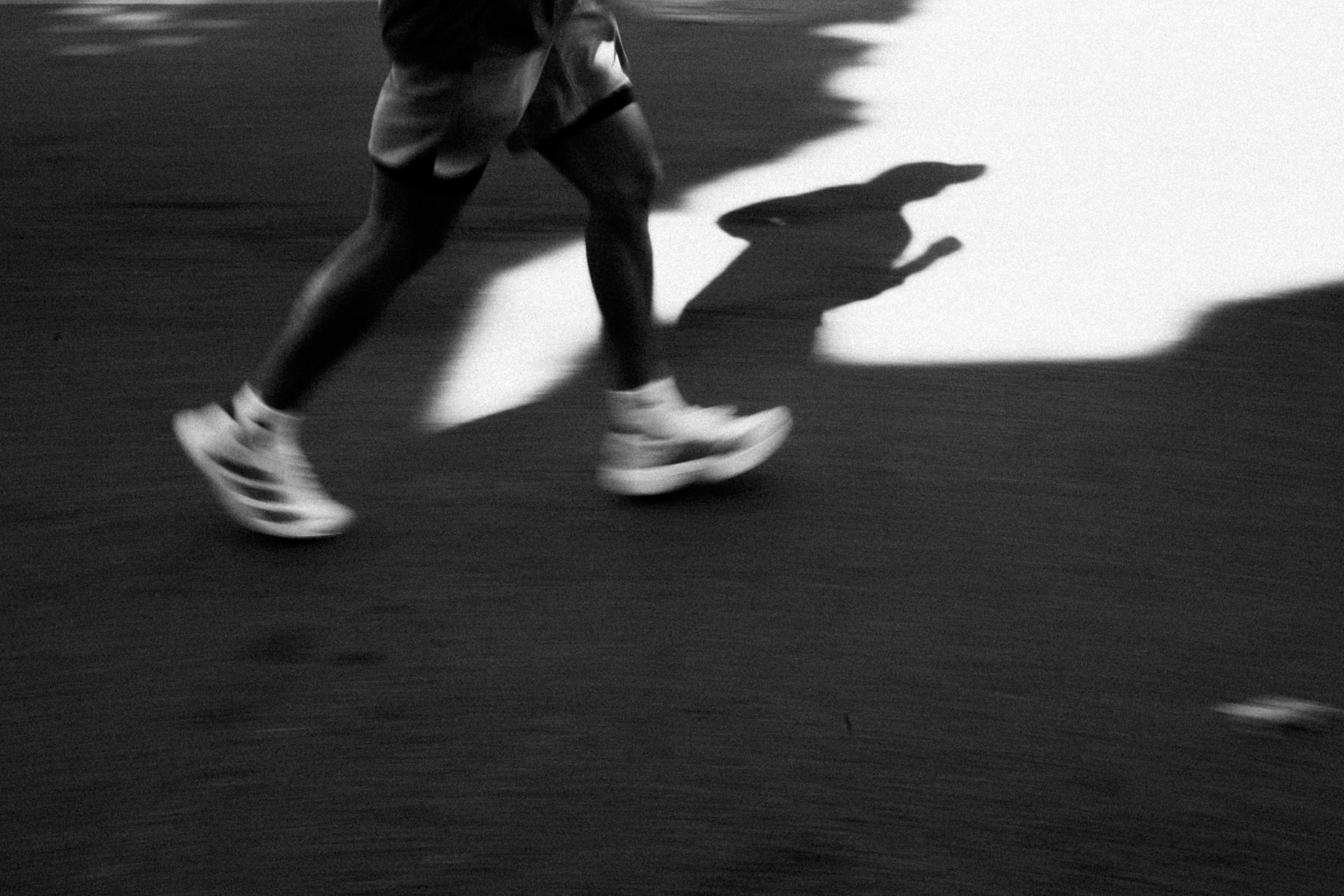
Lateral knee pain that appears at the same point in every ride or run is a load and control problem, not a knee problem.
Lateral knee pain that flares up at the same point in every ride or run is rarely a knee problem. More often, the knee is simply where a hip control issue becomes impossible to ignore.
This is iliotibial band syndrome. It responds well once the actual cause gets treated, rather than just the sore spot. Left unaddressed, however, it tends to return every time training volume increases again.
In this guide, you will find:
- What IT band syndrome actually is
- What is happening in the tissue itself, with a deeper-dive option
- Common causes of IT band syndrome in cyclists and runners
- How we diagnose the root cause at Physio Flora
- Our physiotherapy treatment options for IT band syndrome
- Three physiotherapist-approved exercises to start today
- Answers to the questions our patients ask most
What is IT band syndrome?
The iliotibial band is a thick strip of connective tissue. It runs from the hip down the outside of the thigh, crossing the knee, and attaching just below the joint. It is not a muscle. It is fascia, reinforced by the tensor fasciae latae and part of the gluteus maximus, which feed directly into it.
During running or pedalling, the band stabilises the hip and knee. This happens as your weight shifts onto one leg. It tightens and slides slightly forward and backward across the outside of the knee as the joint bends and straightens.
IT band syndrome develops when the tissue beneath this band becomes irritated from repeated pressure. This sits just above the outside of the knee joint. Pain typically appears a few centimetres above the joint line and worsens with continued activity, which is what separates it from the front-of-knee pattern seen in cyclist's knee.
Deep dive
Go deeper: the tissue science
This section goes deeper into the physiology for readers who want it. Skip ahead to "Common causes of IT band syndrome in cyclists and runners" if you would rather get straight to the practical guidance.
For years, this condition was explained as friction. The band supposedly rubbed back and forth over the bone until it became inflamed. Current research points to a different mechanism. Beneath the iliotibial band sits a layer of richly innervated, well-vascularised fat and connective tissue. It functions similarly to a bursa.
The knee repeatedly bends to around 20 to 30 degrees during the load-bearing phase of a stride or pedal stroke. Each time, this tissue gets compressed between the band and the underlying bone. This happens thousands of times per training session. As a result, the compressed tissue becomes inflamed and sensitive, even though the band stays structurally intact.
This distinction matters for healing. Unlike a muscle strain, there is no discrete tear working through set inflammatory, proliferative, and remodelling phases. Instead, the tissue stays in a low-grade inflammatory state for as long as the compressive load continues unchanged. Once that load is corrected, through better hip control, bike fit, or footwear, the irritated tissue typically settles. This usually takes two to six weeks.
Cases left untreated for months can develop secondary thickening of the compressed tissue. This behaves more like a chronic, sensitised structure. These stubborn presentations usually need eight to twelve weeks of structured rehabilitation before symptoms fully resolve. The tissue has to desensitise, not just adapt to load.
Common causes of IT band syndrome in cyclists and runners
Several contributing factors show up repeatedly in patients with this condition.
Weak hip abductors. When the gluteus medius cannot control the hip properly, the knee drifts inward with every stride or pedal stroke. This increases compression at exactly the point where symptoms develop.
A sudden jump in training volume. Increasing mileage, hill sessions, or cycling distance too quickly does not give the tissue time to adapt to the new load. The same pattern drives most running injuries we see on the coast.
Bike fit issues. A saddle set too high, a saddle positioned too far forward, or misaligned cleats can all change how the knee tracks through each pedal stroke.
Running on cambered surfaces. Repeatedly running on the same side of a sloped road effectively lengthens one leg relative to the other, altering hip mechanics on that side.
Worn or unsuitable footwear. Shoes that have lost cushioning and support change how load travels up through the leg with every stride.
Leg length differences or pelvic asymmetry. Even small structural differences can shift how evenly load is distributed between both sides during repetitive movement.
How we diagnose the root cause at Physio Flora
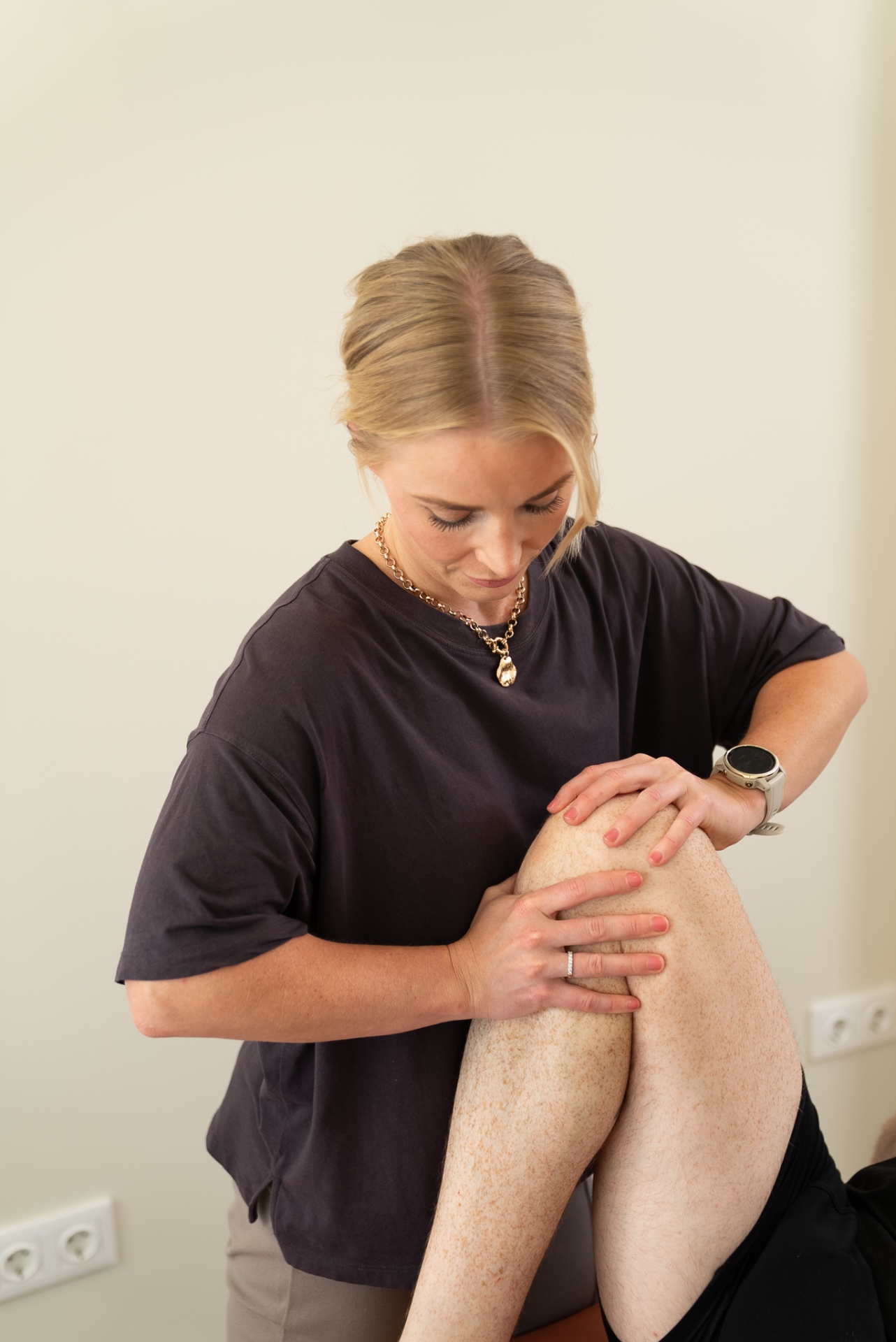 Palpation just above the outside of the joint line, combined with single-leg hip control testing, usually identifies the cause in one session.
Diagnosis starts with a detailed history, including recent changes in training volume, terrain, footwear, or bike setup.
We then palpate the area two to three centimetres above the outside of the knee joint. Tenderness in this exact location is a strong clinical indicator. Specific tests help confirm the diagnosis and identify the underlying cause. These include the Noble compression test and a hip abductor strength assessment during single-leg stance.
For cyclists, we often review pedal stroke mechanics and saddle position as part of this assessment. For runners, a gait analysis frequently reveals the hip control pattern driving the problem. We also rule out related conditions, such as lateral meniscus irritation or a lateral collateral ligament issue. These can present with similar symptoms. Where a broader medical work-up is useful, we coordinate with a sports physician.
Our physiotherapy treatment options for IT band syndrome
This condition is driven by compression and load, not a structural tear. Treatment therefore focuses on changing how that load is managed.
Manual therapy. Hands-on treatment targets the tensor fasciae latae, gluteus maximus, and vastus lateralis. These muscles feed tension into the iliotibial band. The band itself has very little capacity to stretch, so working the muscles around it is far more effective.
Dry needling. This addresses trigger points in the tensor fasciae latae and gluteus medius. These points often stay overactive, contributing to ongoing tightness through the lateral hip and thigh.
Hip and glute strengthening programme. This is the cornerstone of long-term resolution. We rebuild hip abductor strength and control progressively, from isolated exercises through to functional, sport-specific movement patterns.
Bike fit and running gait assessment. Drawing on specific bike fitting qualifications, we assess and adjust saddle height, saddle position, and cleat alignment for cyclists. For runners, we review footwear, cadence, and stride mechanics to reduce repetitive compressive load.
Graded return to training. Using EXOS performance methodology, we build a structured plan for reintroducing volume and intensity. This way, symptoms do not simply return once training ramps back up. You can see the full range on our services page.
Three physiotherapist-approved exercises to start today
These general examples suit early to mid-stage recovery. Always get a physiotherapy assessment first, since the wrong exercise at the wrong stage can prolong symptoms.
- Side-lying hip abduction. Lie on your uninjured side with knees straight. Lift the top leg upward with a slight backward angle, keeping the hip stacked directly over the other. Perform two to three sets of twelve, focusing on control rather than height.
- Single-leg step-down. Stand on a low step on the affected leg. Slowly lower the other foot toward the floor, then return to standing. This builds the eccentric hip control that is often missing in this condition.
- Standing hip hike. Stand on the affected leg on a small step. Let the other side drop slightly, then lift it back level using the standing hip. This directly trains the control that prevents the knee from drifting inward.
Stop any exercise that increases outer knee pain, and check with your physiotherapist before adding load.
Answers to the questions our patients ask most
How long does IT band syndrome take to heal?
Mild, recently developed cases often settle within two to six weeks once training load and hip control are addressed. Chronic cases present for several months can take eight to twelve weeks of structured rehabilitation.
Does foam rolling fix IT band syndrome?
Foam rolling cannot lengthen or stretch the band itself, since it is fascia rather than muscle. It may temporarily reduce sensitivity in the surrounding tissue. However, it does not address the hip control or load issue actually driving the condition.
Can I keep cycling or running with IT band syndrome?
Continuing at the same volume and intensity usually keeps the tissue irritated. Reducing load, adjusting terrain, and working on hip strength alongside treatment typically allows some training to continue while you recover.
Do I need a new bike setup or new running shoes?
Not always. However, if an assessment identifies a clear contributing factor, adjusting it can speed up recovery. It also helps prevent the problem returning.
Is IT band syndrome the same as a tight IT band?
Not exactly. The band itself is naturally taut, since it is fascia rather than elastic muscle tissue. The real issue is usually poor hip control and the resulting compression, not tightness of the band itself.
Ready to fix the outer knee pain properly?
Outer knee pain does not have to end a training block or a race season.
At Physio Flora, we combine thorough clinical assessment with evidence-based treatment and a genuine understanding of an active lifestyle, wherever it is lived. We see cyclists, runners and triathletes from Calahonda, Marbella, Mijas, Fuengirola and across the coast, and the same load-management thinking applies to related overuse problems such as hamstring strain.
No referral needed. Consultations in English, Dutch, German and Spanish. Same-week appointments available.
Fix the hip control issue, and the knee pain usually resolves on its own.