
Qualification
Dry Needling
Precision needling of myofascial trigger points to release tight muscles and reduce referred pain.
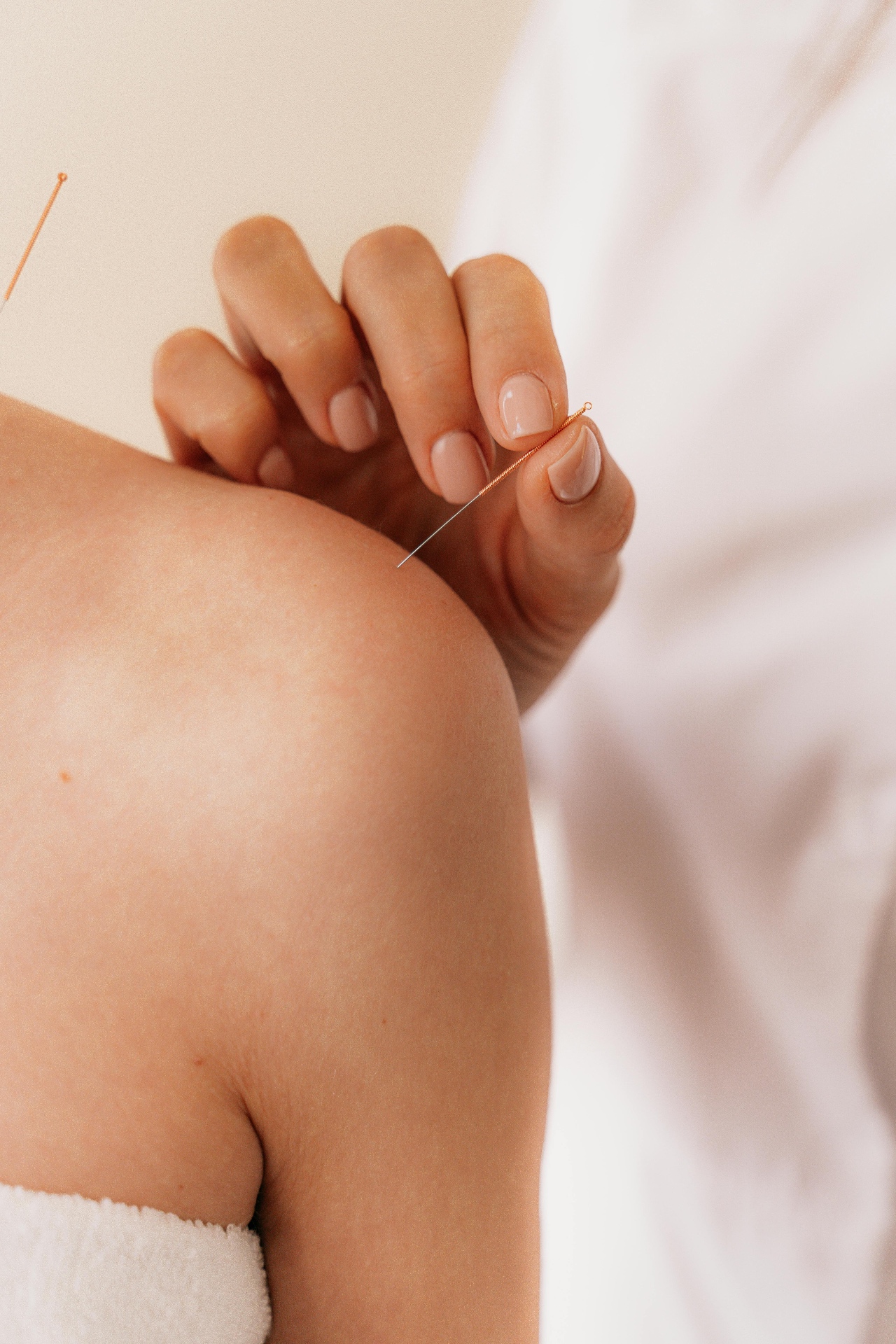
In short
Fine filament needles are inserted into myofascial trigger points to elicit a twitch response, release tension and reduce local and referred pain.
Key benefits
- Rapid release of stubborn muscle knots that don't respond to massage.
- Reduces referred pain patterns like tension headaches or gluteal-driven leg pain.
- Complements manual therapy and exercise for faster, longer-lasting results.
Who it's for
- Tension headaches, neck and shoulder tightness.
- Low-back and gluteal pain, including referred symptoms down the leg.
- Chronic tendon and overuse issues with surrounding muscle guarding.
Conditions Flora treats with Dry Needling
- Tension and cervicogenic headaches
- Neck, shoulder and upper trapezius tightness
- Low-back and gluteal trigger points (including referred leg pain)
- Chronic tendinopathy with muscle guarding
How Flora uses this in your treatment
When manual therapy alone isn't reaching a deep trigger point, Flora uses a fine, sterile filament needle to release it directly. Most patients feel a brief twitch, followed by a distinct drop in tension.
Dry needling is always combined with movement and loading — the needle unlocks the tissue; the exercise keeps it unlocked.
Full detail
Dry needling uses a fine, sterile filament needle inserted directly into a myofascial trigger point — a taut, hyper-irritable band inside a muscle. The needle stimulates a local twitch response that releases the trigger point, restores blood flow and reduces both local and referred pain.
It is not acupuncture: dry needling is grounded in Western neuroanatomy and is used to complement manual therapy and exercise, not replace them. Common applications include tension headaches, neck and shoulder pain, low-back and gluteal pain, and stubborn tendon issues.
Frequently asked questions
- Is dry needling the same as acupuncture?
- No. Both use fine needles, but dry needling is grounded in Western neuroanatomy and targets specific myofascial trigger points. Acupuncture is based on traditional Chinese meridians.
- Does dry needling hurt?
- You typically feel a brief twitch or cramp-like sensation when the needle reaches the trigger point, followed by a distinct release. Most patients describe the feeling as satisfying rather than painful.
- How long do dry needling results last?
- Immediate relief is common. Long-term results depend on combining needling with movement, loading and posture work — which is why Flora always pairs it with exercise.