
Qualification
Taping
Rigid and elastic taping techniques to support joints, offload tissues and enhance movement awareness.
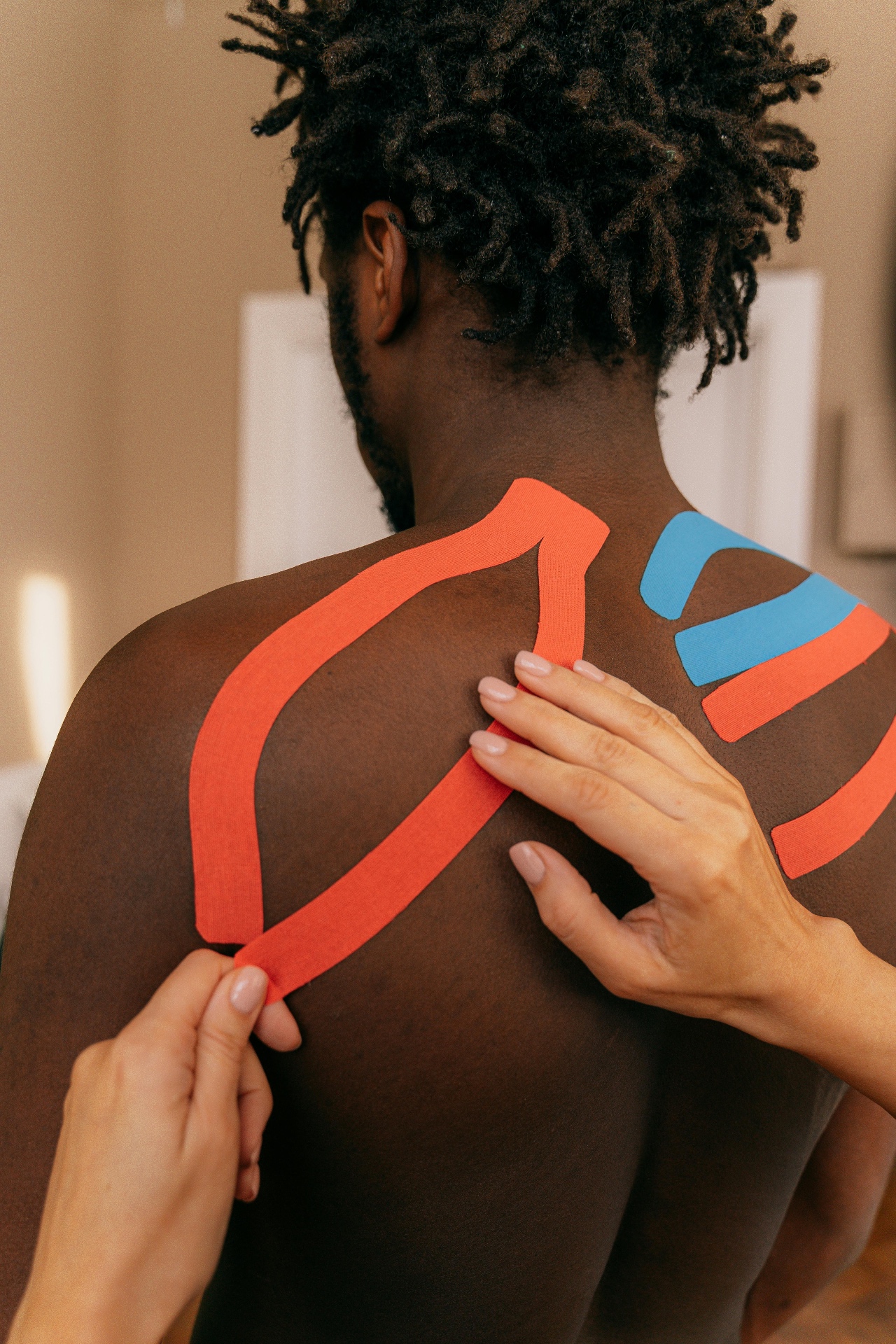
In short
Rigid athletic tape for firm mechanical support and elastic kinesiology tape for facilitation, feedback and offloading — matched to the tissue and the moment.
Key benefits
- Extra support and confidence to return to activity earlier.
- Offloads irritated tendons and joints while they heal.
- Postural and proprioceptive cueing that reinforces good movement.
Who it's for
- Athletes returning to sport after a sprain or strain.
- Patients with tendon irritation who need to keep moving.
- Anyone needing short-term support during a busy week, event or trip.
Conditions Flora treats with Taping
- Ankle sprains and instability
- Knee pain and patellar tracking issues
- Shoulder impingement and postural loading
- Tendinopathies needing offloading
How Flora uses this in your treatment
Flora uses rigid tape when a joint needs firm mechanical support — ankles for a match, thumbs for climbing, shoulders for overhead sport.
For softer needs — tendon offloading, postural cueing, lymphatic support — she uses elastic kinesiology tape that lasts several days in the shower and gym.
Full detail
Taping is used to protect vulnerable joints, offload irritated tendons, provide proprioceptive feedback and give patients confidence to return to activity earlier. Flora uses both rigid athletic taping — for firm mechanical support during sport — and elastic kinesiology taping — for facilitation, lymphatic drainage and postural cueing.
The right tape at the right time is a bridge between hands-on treatment and full independence.
Frequently asked questions
- What's the difference between kinesiology tape and athletic tape?
- Athletic (rigid) tape provides firm mechanical support and typically stays on for one session or match. Kinesiology tape is elastic, offers proprioceptive and offloading input, and can stay on for 3–5 days.
- How long does taping last?
- Rigid athletic tape is applied for a single session or event. Kinesiology tape usually stays on 3–5 days, including through showers and training.
- Can taping replace rehab exercises?
- No. Taping is a short-term bridge — the exercises are what create lasting change. Flora uses both together.