
26 October 2026 · Flora Muijzer · 6 min read
Last-minute tips for the Malaga Marathon: tapering, treatment, and nutrition before race day
Running the Malaga Marathon? Physio Flora shares last-minute tapering, treatment, and nutrition tips, plus a special post-marathon recovery offer.

Fresh legs and full energy stores help you make the most of your marathon training on race day.
The Malaga Marathon is on Sunday, November 8th. Race week is all about the taper. The training is largely done. What you do with these final days matters just as much as the months behind you.
Tapering is not about doing less because you are losing fitness. It is about arriving at the start line with fresh legs and full energy stores, ready to use everything you have already built.
In this guide, you'll find:
- Why tapering works, and what's actually happening in your muscles
- Do's and don'ts for the final taper week
- Treatment and massage timing before race day
- Nutrition and hydration tips for race week
- What to do in the hours and days after you finish
- A post-marathon recovery offer from Physio Flora
Deep dive
Go deeper: what's actually happening in your body during taper week
This section goes deeper into the physiology for readers who want it. Skip ahead to "Tapering do's and don'ts" if you'd rather get straight to the practical guidance.
Marathon training creates a steady build-up of small muscle microdamage, since every long run breaks down tissue slightly before it adapts and strengthens. Reducing training volume in the final week gives that tissue time to fully repair, without the daily cycle of new microdamage.
At the same time, muscle glycogen stores, your main fuel source for the marathon, get a chance to fully recover and then supercompensate. As a result, less training combined with adequate carbohydrate intake actually increases the fuel available in your muscles on race day, rather than depleting it further.
The nervous system also benefits. Heavy training fatigues the neuromuscular system, the connection between brain and muscle that drives efficient running form. A short taper allows this system to recover, which is why many runners feel surprisingly sharp and light-legged by race morning, even after reducing mileage significantly.
This is why tapering typically starts one to three weeks out, depending on training volume, and becomes more pronounced in the final seven to ten days. Cutting volume too early risks losing fitness. Cutting it too late does not leave enough time for the tissue and glycogen recovery to complete.
Tapering do's and don'ts for the final week
- Do reduce your weekly mileage by roughly 40 to 60 percent compared to your peak training week, while keeping some short efforts at race pace. This maintains neuromuscular sharpness without adding fatigue.
- Don't attempt a new long run or a personal best effort this week. There is no fitness benefit large enough to justify the fatigue it creates this close to race day.
- Do prioritise sleep over everything else. Sleep is when most of the tissue repair and glycogen restoration described above actually takes place.
- Don't introduce new shoes, socks, or gear for race day. Anything that touches your skin or changes your stride should already be proven in training.
- Do keep some light movement daily, even on rest days. Gentle activity supports circulation without adding meaningful fatigue.
- Don't suddenly stop moving altogether. Complete inactivity in taper week can leave legs feeling flat and heavy rather than fresh.
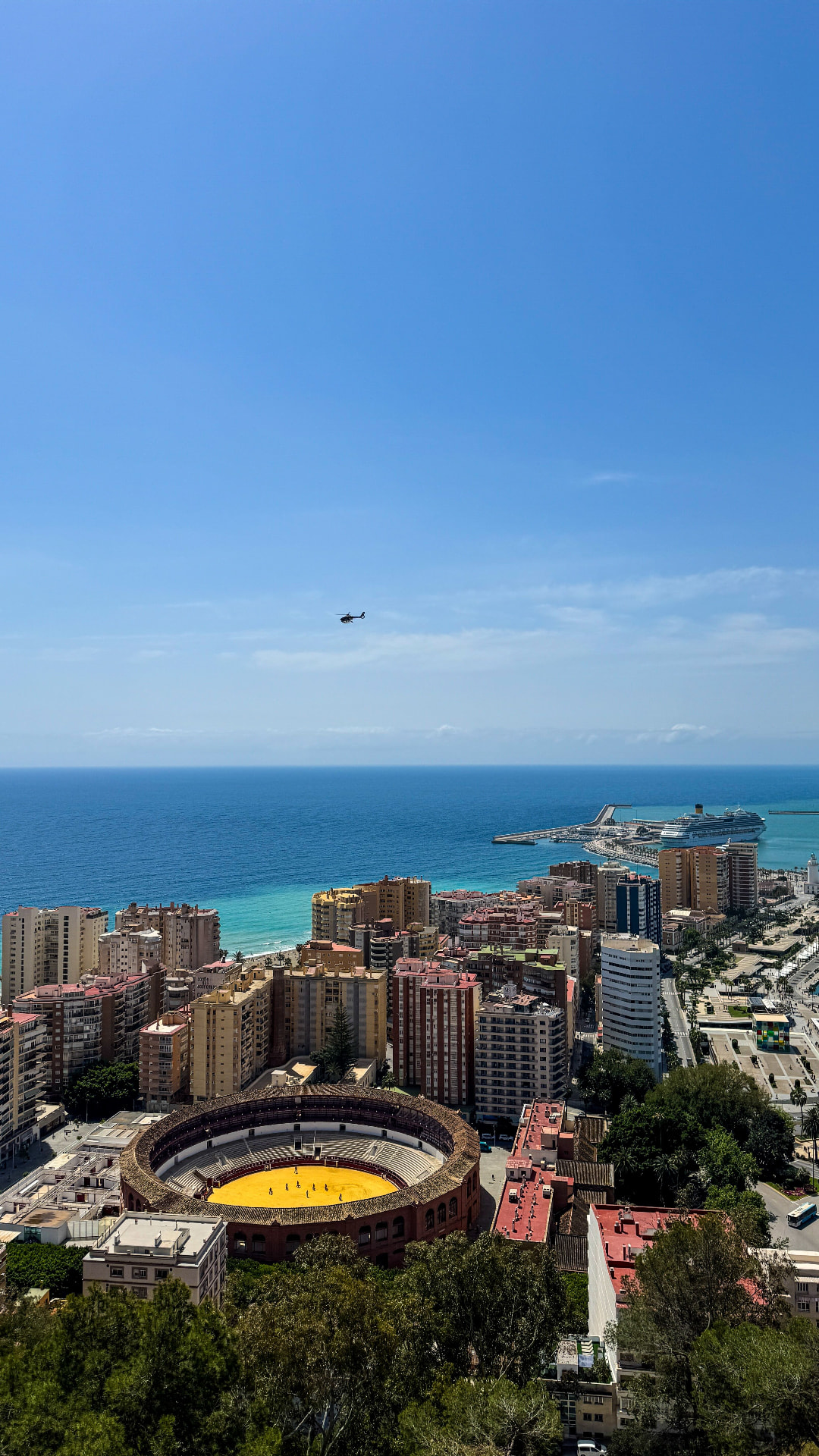 Málaga's city, harbour and Mediterranean coastline — the setting for marathon weekend.
Treatment and massage timing before race day
Treatment choices in race week are about timing, not avoidance altogether.
Earlier in the taper, five to seven days out, a maintenance sports massage or manual therapy session can address any nagging tightness without creating new soreness that needs to settle. This is also a good window for dry needling if a specific muscle has been troubling you.
In the final 48 to 72 hours, avoid deep tissue work, aggressive massage, or any new treatment altogether. Deep work can create short-term soreness and swelling, which has no time to resolve before the start line.
Foam rolling in the final two days should stay light, more for circulation and nervous system calm than for working through tightness.
Any genuinely new pain or sharp discomfort this close to race day deserves an assessment rather than a guess. A quick check can clarify whether it is safe to race or needs adjusting.
Nutrition and hydration tips for race week
Carbohydrate loading matters most in the final two to three days, not the night before alone. Gradually increasing carbohydrate intake while training volume drops is what builds the glycogen stores you will use on race day.
Hydration and electrolytes deserve steady attention all week, not just the morning of the race. Consistent, moderate fluid intake works better than trying to overhydrate at the last minute.
Stick to familiar foods. Race week is not the time to try a new supplement, a new pre-race meal, or an unfamiliar restaurant. Your gut performs best on what it already knows.
Caffeine, if you use it, should follow whatever strategy you have already practised in training. Race day is not the day to test a new dose or timing.
On race morning, eat your usual pre-long-run breakfast, with enough time to digest before the start. Familiarity reduces the risk of gastrointestinal issues during the race itself.
What to do in the hours and days after you finish
The finish line is not the end of the recovery process. It is the start of it.
In the first thirty to sixty minutes, keep walking gently rather than sitting down immediately. Refuel with a combination of carbohydrate and protein, and rehydrate steadily rather than all at once.
Over the following 48 hours, light movement, such as walking or gentle cycling, supports circulation better than complete rest. However, deep tissue massage is best delayed for at least 48 hours, since muscles need a short window to settle before tolerating firm pressure well.
In the days after, expect some muscle soreness and fatigue for up to a week. Gradually easing back into light training, rather than returning to full volume immediately, reduces the risk of injury during this vulnerable recovery window.
A post-marathon recovery offer from Physio Flora
To support Malaga Marathon runners through recovery, we're offering a special post-marathon recovery session for 85 euros for a full hour, combining sports massage with personalised tips to help you recover faster and get back to training safely.
This offer is available for a limited time after race day. Simply mention the Malaga Marathon when you book, by phone, WhatsApp, or through our website.
Frequently asked questions
Should I still train at all in the final week before a marathon?
Yes, but at reduced volume. Short, light efforts at race pace keep your legs sharp, while the overall reduction in mileage allows tissue and glycogen recovery to complete.
Is massage safe right before a marathon?
Light, maintenance-style massage earlier in the week is fine. Avoid deep tissue work in the final 48 to 72 hours, since it can create soreness that has no time to settle before the start.
What should I eat the night before the race?
Something familiar, carbohydrate-rich, and already tested in training. The night before is not the time to experiment with new foods.
How soon can I get a massage after the marathon?
Wait at least 48 hours before deep tissue work. Lighter techniques and gentle movement are appropriate sooner, and support circulation during the first two days.
What's the biggest mistake runners make in race week?
Doing too much, too late. A new long run, an untested shoe, or an aggressive massage just before race day can undo weeks of careful preparation.
Race week is short, but it carries real weight in how your marathon goes.
At Physio Flora, we combine thorough clinical assessment with evidence-based treatment and a genuine understanding of an active lifestyle, wherever it's lived. No referral needed. Consultations available in English, Dutch, German and Spanish. Same-week appointments available.
Good luck on Sunday, November 8th. Whatever your finish time, give your body the recovery it has earned.
Book your marathon recovery session
Physio Flora · English, Dutch, German and Spanish-speaking physiotherapy on the Costa del Sol · Specialising in endurance sport and race recovery