9 November 2026 · Flora Muijzer · 7 min read
Calf strain: why the back of your lower leg gives way, and how to return to running safely
Calf strain from running or racquet sports? Physio Flora in Calahonda offers sports massage, dry needling, and graded return-to-running rehab. Home visits in Marbella.
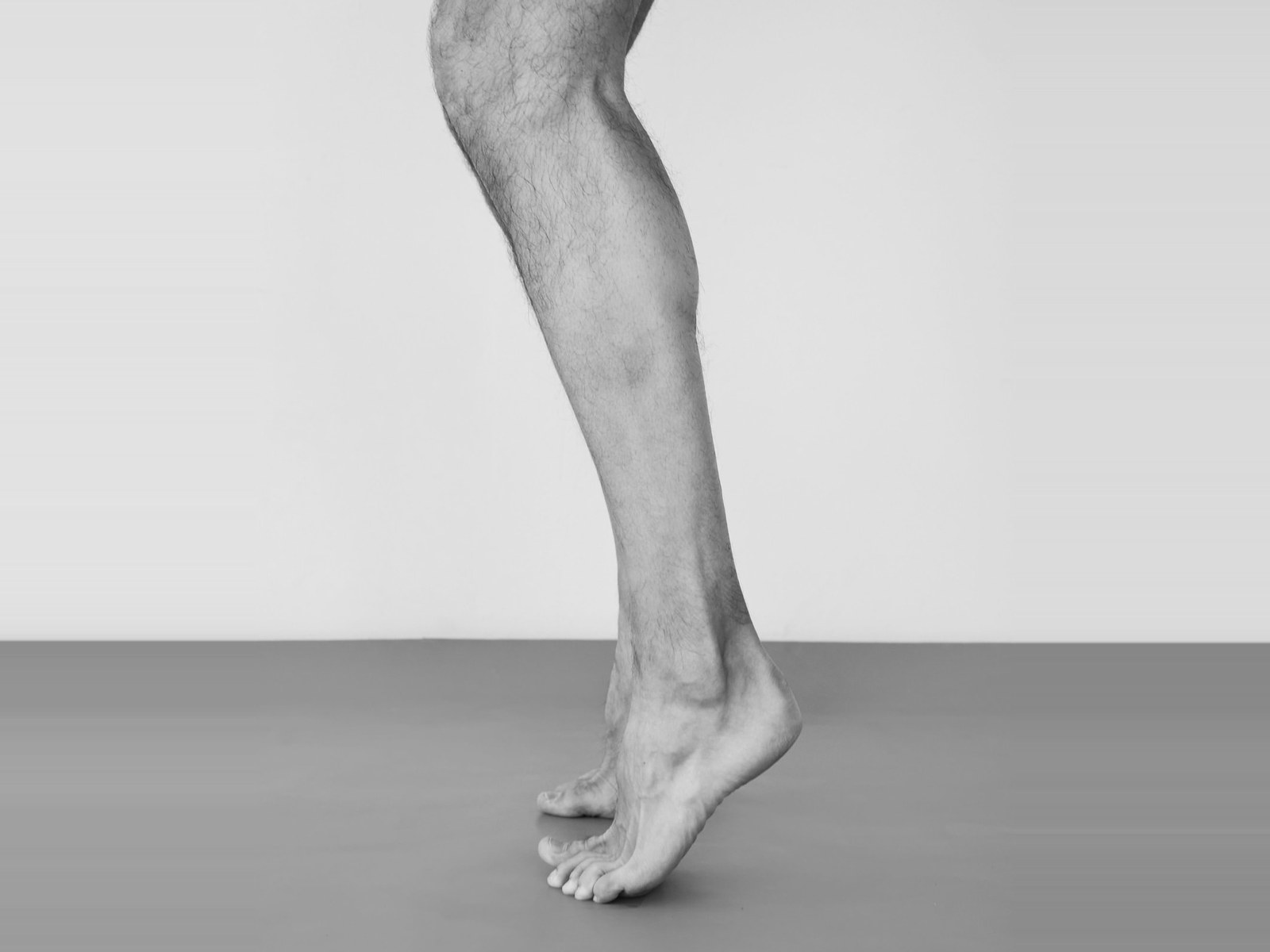
The calf muscles and Achilles tendon power every push-off, which is why a strain is felt with every step.
Have you ever felt a sudden "kick" in the back of your leg, as if someone had hit you with a ball? Many patients describe exactly that. It is the classic sign of a calf strain, and it often happens in the final kilometres of a race or the last set of a tennis match.
The calf is a hard-working muscle group, and it heals well with the right plan. However, returning too early is the most common reason a strain comes back.
In this guide, you'll find:
- What a calf strain actually is, and which muscle is involved
- What's happening in the muscle tissue (with a deeper-dive option)
- The most common causes of calf strains in runners and racquet players
- How we diagnose the root cause at Physio Flora
- Our physiotherapy treatment options for calf strains
- Three physiotherapist-approved exercises to start today
- Answers to the questions our patients ask most
What is a calf strain?
The calf has two main muscles. The gastrocnemius is the larger, visible muscle that crosses both the knee and the ankle. The soleus lies underneath and crosses only the ankle. Together they form the Achilles tendon and power every push-off.
A strain is a tear in the muscle fibres. It ranges from a few overstretched fibres to a complete rupture. Clinicians usually grade it from one to three.
The two muscles strain in different ways. The gastrocnemius is injured most often during fast, explosive movements with a straight knee, such as sprinting or lunging. The soleus is injured more often during steady running with a bent knee, and it tends to cause a deeper, duller ache.
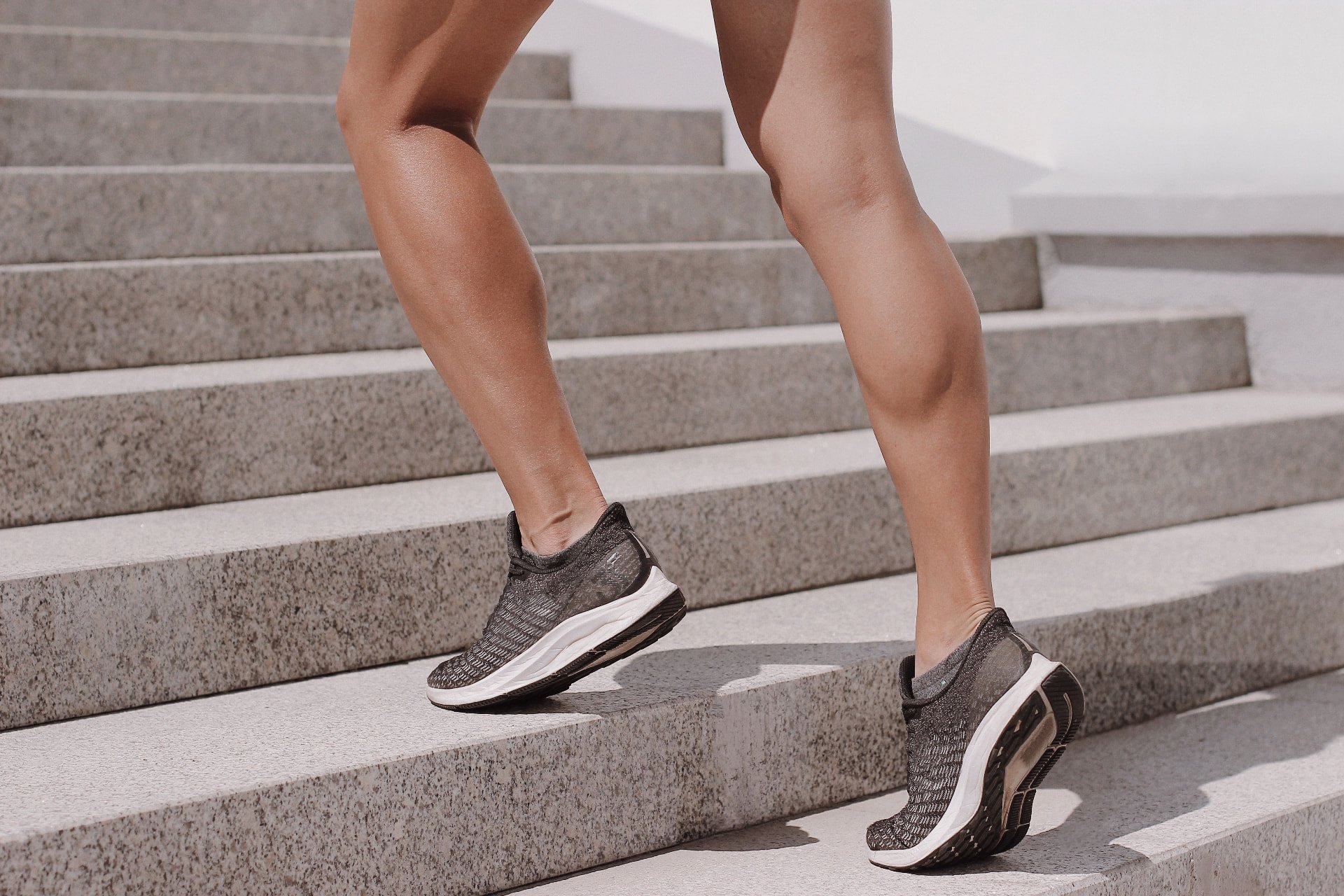 Stairs, hills and fast push-offs ask the most of the calf, and late-session fatigue is when strains often happen.
Deep dive
Go deeper: the tissue science
This section goes deeper into the physiology for readers who want it. Skip ahead to "Common causes of calf strains" if you'd rather get straight to the practical guidance.
Muscle is made of bundles of fibres held together by connective tissue. Most strains occur at the junction where muscle fibres meet the tendon. This area carries the highest load, so it is the weakest link when the muscle lengthens under tension.
When fibres tear, small blood vessels tear with them. As a result, bruising and swelling can appear, sometimes tracking down toward the ankle a day or two later.
Muscle heals in three overlapping phases. The inflammatory phase lasts roughly the first five days. The repair phase follows from about five days to six weeks, as new fibres and scar tissue form. The remodelling phase then runs from about six weeks to several months, as the scar tissue realigns along the lines of force.
Timelines depend on the grade. A grade 1 strain often settles in one to three weeks. A grade 2 strain usually needs three to six weeks. A grade 3 tear can take three months or more, and sometimes needs specialist input.
Soleus strains also tend to heal more slowly than gastrocnemius strains. The soleus is rich in slow-twitch fibres and works constantly, so it is harder to rest fully. In addition, early loading matters. Muscle that is protected too long loses strength, while muscle that is loaded too early re-tears.
Common causes of calf strains
Calf strains rarely come from nothing. Typical triggers include:
- A sudden increase in running volume, hills, or speed work
- Sprinting or explosive push-offs, as in tennis, padel, and football
- Fatigue late in a race or match, when the muscle can no longer absorb load
- A previous calf injury that was never fully rehabilitated
- Tight or weak ankle movement, which forces the calf to work harder
- Dehydration, poor sleep, or too little recovery between sessions
Footwear and surface changes also play a role. A switch to lower-drop shoes, for example, loads the calf much more than most runners expect.
How we diagnose the root cause at Physio Flora
A calf strain can look like other problems, so an accurate diagnosis comes first. Our assessment typically includes:
- A history of exactly how and when the pain began
- Palpation to locate the injured muscle and the point of tenderness
- Single-leg heel raise testing with a straight knee and a bent knee, which separates gastrocnemius from soleus
- Ankle range of motion and balance testing
- A look at running mechanics and training load, which often reveal why the strain happened
We also screen for deep vein thrombosis. Calf pain with swelling, warmth, or redness but no clear injury needs same-day medical review. Likewise, a "pop" with severe weakness or an inability to rise onto your toes may point to a complete tear or Achilles involvement.
Our physiotherapy treatment options for calf strains
Treatment follows the healing phases, with early gentle loading as the guiding principle.
Early management. In the first few days, we reduce swelling and protect the muscle. A small heel lift in your shoe can reduce strain while walking. Complete rest is rarely needed.
Sports massage. Once the acute phase settles, soft tissue work improves circulation and reduces the guarding that develops around the injury. We avoid deep massage directly on a fresh tear.
Dry needling. Targeted needling of the calf and surrounding muscles reduces protective tension. As a result, the muscle can lengthen and load more comfortably.
Manual therapy. Ankle joint mobilisation restores dorsiflexion, which is often limited after a calf injury. Better ankle movement reduces the strain placed on the muscle.
Progressive strengthening. This is the core of recovery. We build from isometric holds to heel raises, first with a straight knee, then with a bent knee for the soleus. We then add single-leg and loaded work.
Sports performance coaching. EXOS-based coaching rebuilds running mechanics, calf-tendon stiffness, and sprint readiness. We clear a return to running through strength and function tests, not only by the calendar.
Three physiotherapist-approved exercises to start today
Start only when walking is reasonably comfortable. Stay within mild discomfort, and stop if you feel sharp pain.
-
Seated calf raises. Sit with your knees bent at 90 degrees and your feet flat. Lift your heels slowly, then lower for three seconds. Do three sets of fifteen. This targets the soleus.
-
Double-leg heel raises. Stand holding a wall for balance. Rise onto your toes, hold for two seconds, and lower slowly. Do three sets of twelve. This targets the gastrocnemius.
-
Ankle alphabet. Sit with your leg extended and draw each letter of the alphabet with your big toe. This restores gentle ankle movement and blood flow without heavy load.
As pain settles, progress to single-leg raises. A proper assessment tells you when.
Answers to the questions our patients ask most
How do I know if it is a calf strain or something else?
A strain usually begins with a sudden sharp pain during activity, followed by tenderness and pain when rising onto your toes. Pain without any injury, together with swelling or warmth, needs medical review to rule out a blood clot.
Should I stretch a strained calf?
Not aggressively at first. Strong stretching can pull on healing fibres. Gentle movement is helpful early, and stretching comes later in a controlled way.
How long until I can run again?
A grade 1 strain often allows a return within two to three weeks. A grade 2 strain usually needs four to eight weeks. Importantly, we base your return on strength and function, such as repeated single-leg heel raises.
Can I keep training while it heals?
Often yes. Cycling, swimming, and upper body work are usually possible. We guide what is safe for your grade.
Why does my calf keep re-straining?
Usually because rehabilitation stopped when the pain stopped. Strength and tendon stiffness often lag behind. Finishing the full progression is the best protection.
Do I need an ultrasound or MRI?
Usually not. Imaging helps when the diagnosis is unclear or a complete tear is suspected.
A calf strain does not have to become a recurring problem, as long as the recovery plan is finished properly.
At Physio Flora, we combine thorough clinical assessment with evidence-based treatment and a genuine understanding of an active lifestyle, wherever it's lived. No referral needed. Consultations available in English, Dutch, German and Spanish. Same-week appointments available.
Your calves push you through every stride. Give them a recovery plan that rebuilds the strength to keep going.
Physio Flora · English, Dutch, German and Spanish-speaking physiotherapy on the Costa del Sol · Specialising in running injuries, muscle strains, and return-to-sport rehabilitation
Read more about Achilles tendinopathy, shin splints and returning to running after injury.