16 November 2026 · Flora Muijzer · 6 min read
Gluteal tendinopathy: why the outside of your hip hurts, and why it is rarely bursitis
Outer hip pain that is not bursitis? Physio Flora in Calahonda treats gluteal tendinopathy with shockwave, strengthening, and dry needling. Home visits in Marbella.
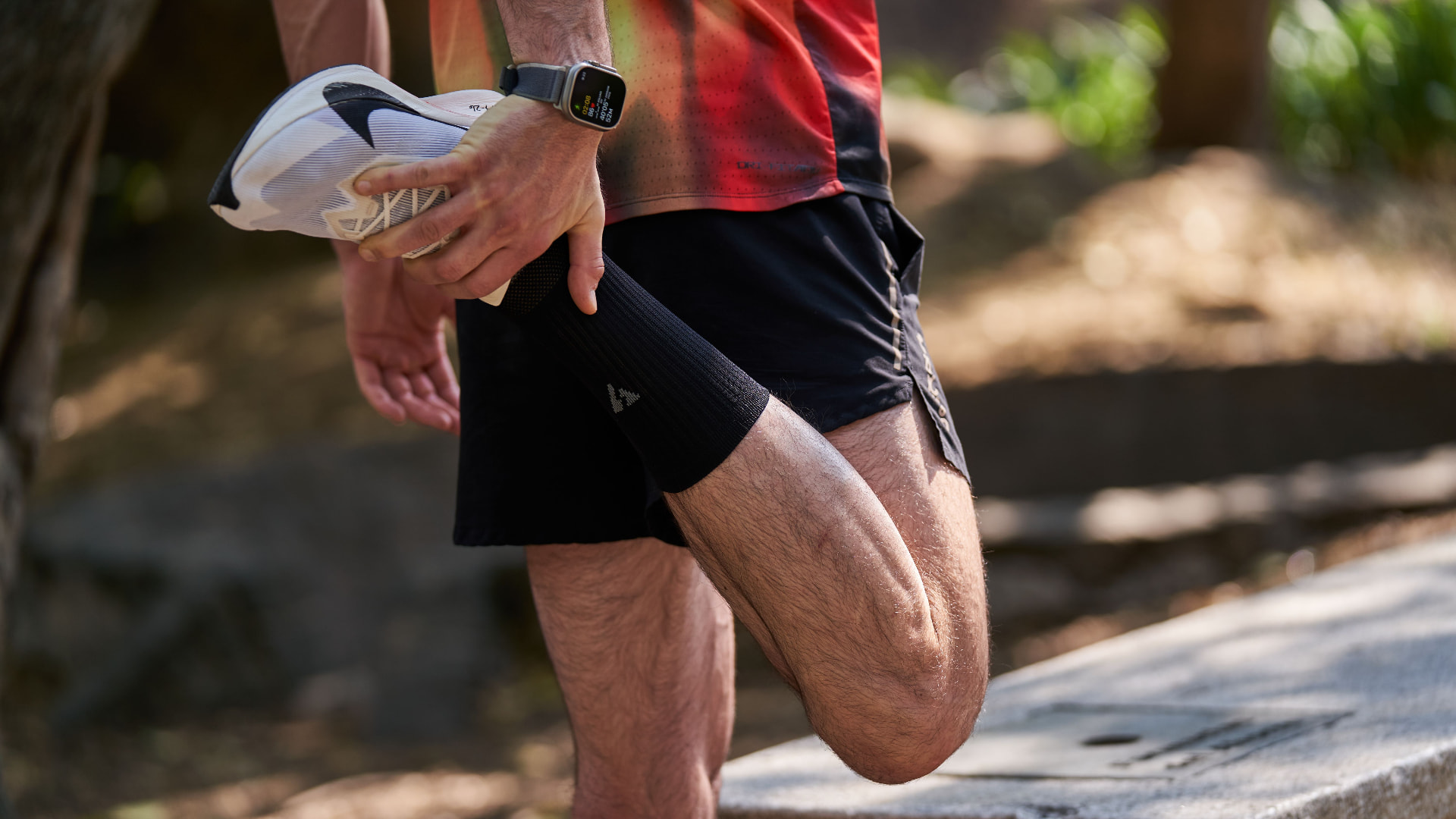
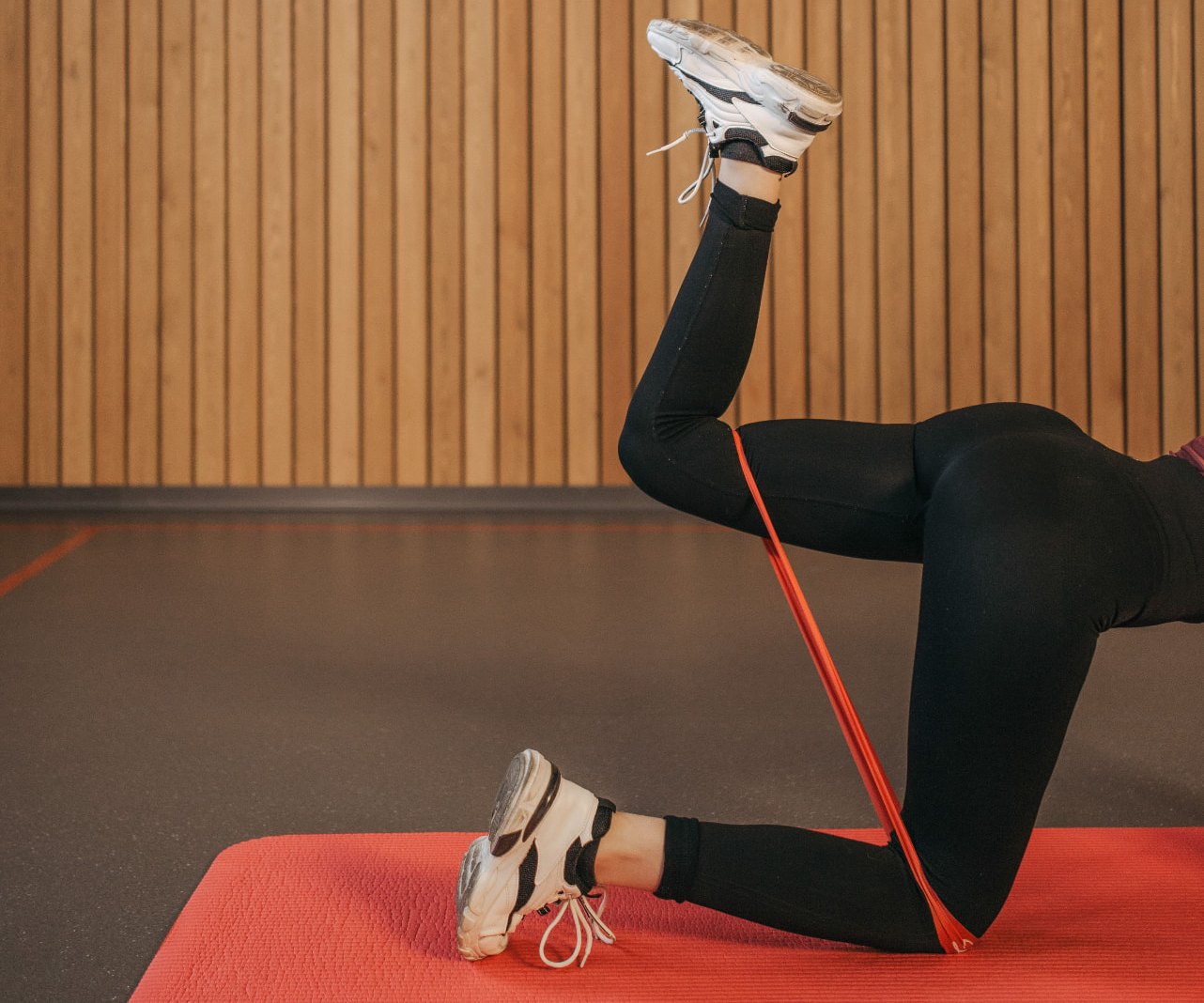 Strong gluteal muscles keep the pelvis level with every step, which takes pressure off the tendons on the outside of the hip.
Women are roughly three times more likely than men to develop pain on the outside of the hip, and the peak is between the ages of 40 and 60. Many of them are told they have "trochanteric bursitis". More often, the real problem is a tendon.
Gluteal tendinopathy is very treatable. However, the common advice to stretch and rest often makes it worse.
In this guide, you'll find:
- What gluteal tendinopathy is, and how it differs from bursitis
- What's happening in the tendon (with a deeper-dive option)
- The most common causes in runners, walkers, and golfers
- How we diagnose the root cause at Physio Flora
- Our physiotherapy treatment options, including shockwave therapy
- Three physiotherapist-approved exercises to start today
- Answers to the questions our patients ask most
What is gluteal tendinopathy?
The gluteus medius and gluteus minimus are the muscles on the side of your buttock. They keep your pelvis level when you stand on one leg. Both attach to the bony point on the outside of the hip, called the greater trochanter.
Gluteal tendinopathy is a problem in those tendons where they attach to the bone. It causes pain on the outside of the hip, often spreading down the outer thigh. The pain is typically worse when lying on the affected side, climbing stairs, or standing on one leg.
Bursitis involves a fluid-filled sac near the hip. Research suggests the bursa is rarely the main source of pain. In most cases, the tendon is the primary problem. This is important, because the best treatment is different.
Deep dive
Go deeper: the tissue science
This section goes deeper into the physiology for readers who want it. Skip ahead to "Common causes of gluteal tendinopathy" if you'd rather get straight to the practical guidance.
Tendons connect muscle to bone and transmit force. They are built from tightly packed collagen fibres. A healthy tendon handles load by adapting and getting stronger.
At the hip, the gluteal tendons wrap over the greater trochanter. This creates compression, because the tendon is squeezed against the bone. Compression is especially high when the hip drops inward, for example when crossing your legs, standing with your weight on one hip, or lying on your side. Compression plus repeated load disrupts the collagen structure. As a result, the tendon becomes thicker, less organised, and more sensitive.
Tendons do not heal like muscle. They have a limited blood supply, and they remodel slowly. In addition, the process is not mainly one of inflammation, so anti-inflammatory approaches often give only short-term relief.
Healing relies on progressive loading. A typical timeline is 12 weeks or longer for meaningful change, and sometimes up to six months. Hormonal changes around menopause may also affect tendon quality, which could explain why the condition peaks in midlife.
Long-standing cases behave differently from recent ones. The longer a tendon has been irritated, the more gradually it needs to be loaded.
Common causes of gluteal tendinopathy
This condition usually builds up gradually. Typical contributors include:
- A sudden increase in walking, hiking, or running volume
- Weak gluteal muscles, which allow the pelvis to drop with each step
- Sitting with crossed legs, or standing with weight on one hip
- Side sleeping on the painful side, especially without support
- Stretching the outer hip or iliotibial band, which increases compression
- Hormonal changes around menopause
- Golf, due to repeated rotation over a planted leg
Running and walking on cambered roads or beach sand can also add to the load, because they change pelvic position.
How we diagnose the root cause at Physio Flora
Hip pain has many sources, including the lower back, the hip joint, and referred nerve pain. Our assessment typically includes:
- A history of where pain is felt and what provokes it
- Palpation over the greater trochanter to locate the tender tendon
- A single-leg stance test. Pain within 30 seconds is a strong sign
- Resisted hip abduction and rotation tests
- Hip joint, lower back, and nerve screening, to rule out other causes
- Movement analysis during walking, stairs, and single-leg tasks
We refer for imaging when the diagnosis is unclear, or when a significant tendon tear is suspected.
Our physiotherapy treatment options for gluteal tendinopathy
Treatment has two parts: reducing compression and rebuilding tendon capacity.
Education and load management. This often brings the first improvement. We teach you how to reduce hip drop and compression. For example, we advise against crossing your legs, and recommend a pillow between your knees when side sleeping.
Progressive strengthening. This is the core of treatment. We start with isometric holds, which can reduce pain. We then move to heavier, slower strengthening of the hip abductors. Research indicates that education combined with exercise gives better long-term results than a corticosteroid injection.
Shockwave therapy. Shockwave is a strong option for stubborn tendon pain. Studies suggest it can help gluteal tendinopathy, particularly when combined with exercise. It is a genuine differentiator for this condition, because many people never hear about it.
Dry needling. Targeted needling of the gluteal and deep hip muscles reduces protective tension and the referred ache down the thigh.
Manual therapy. Hip and lower back mobilisation addresses stiffness that can alter how the pelvis moves.
Sports performance coaching. EXOS-based coaching retrains gait, single-leg control, and hip strength for running, golf, and walking.
Three physiotherapist-approved exercises to start today
Keep pain at a mild level only. Avoid positions where the hip drops inward or the leg crosses the midline.
-
Isometric side-lying abduction hold. Lie on your pain-free side with a pillow between your knees. Lift the top leg slightly and hold for 30 seconds. Repeat four times. This loads the tendon without compression.
-
Standing wall push. Stand beside a wall with your painful leg away from it. Press the outer knee gently into a rolled towel against the wall and hold for 30 seconds. This builds strength in a neutral position.
-
Glute bridge. Lie on your back with knees bent, hip-width apart. Lift your hips, hold for three seconds, and lower slowly. Do three sets of ten. This builds gluteal strength without side compression.
Avoid hip stretches and foam rolling over the outside of the hip. Both increase compression.
Answers to the questions our patients ask most
Is this bursitis?
Probably not. Research indicates that the tendon is the main source in most cases. Treatment for tendon pain differs from treatment for bursitis, so an accurate diagnosis helps.
Should I rest?
Relative rest from aggravating positions helps. However, complete rest weakens the muscles. Progressive loading is the most effective approach.
Should I stretch my outer hip or IT band?
No. Stretching across the hip compresses the tendon against the bone and tends to increase pain.
How long will recovery take?
Many people improve within eight to twelve weeks. Full recovery can take up to six months, especially for long-standing cases.
Does a cortisone injection help?
It can reduce pain in the short term. However, research suggests that education and exercise provide better results after a year.
Can I keep running or playing golf?
Often yes, with changes to load and technique. We guide what is safe at each stage.
Hip pain that wakes you at night is not something you have to live with. A tendon responds to the right kind of load.
At Physio Flora, we combine thorough clinical assessment with evidence-based treatment and a genuine understanding of an active lifestyle, wherever it's lived. No referral needed. Consultations available in English, Dutch, German and Spanish. Same-week appointments available.
Your hips carry every step you take. Give them a plan built on strength, not stretching.
Physio Flora · English, Dutch, German and Spanish-speaking physiotherapy on the Costa del Sol · Specialising in tendon injuries, shockwave therapy, and hip rehabilitation
Read more about hip impingement, IT band syndrome and returning to running after injury.