
31 August 2026 · Flora Muijzer · 7 min read
Golfer's elbow: why inner-elbow pain sidelines golfers and racquet players, and how physiotherapy fixes it
Inner elbow pain from golf, padel or tennis? Physio Flora treats medial epicondylalgia on the Costa del Sol with manual therapy, dry needling, shockwave and progressive loading.
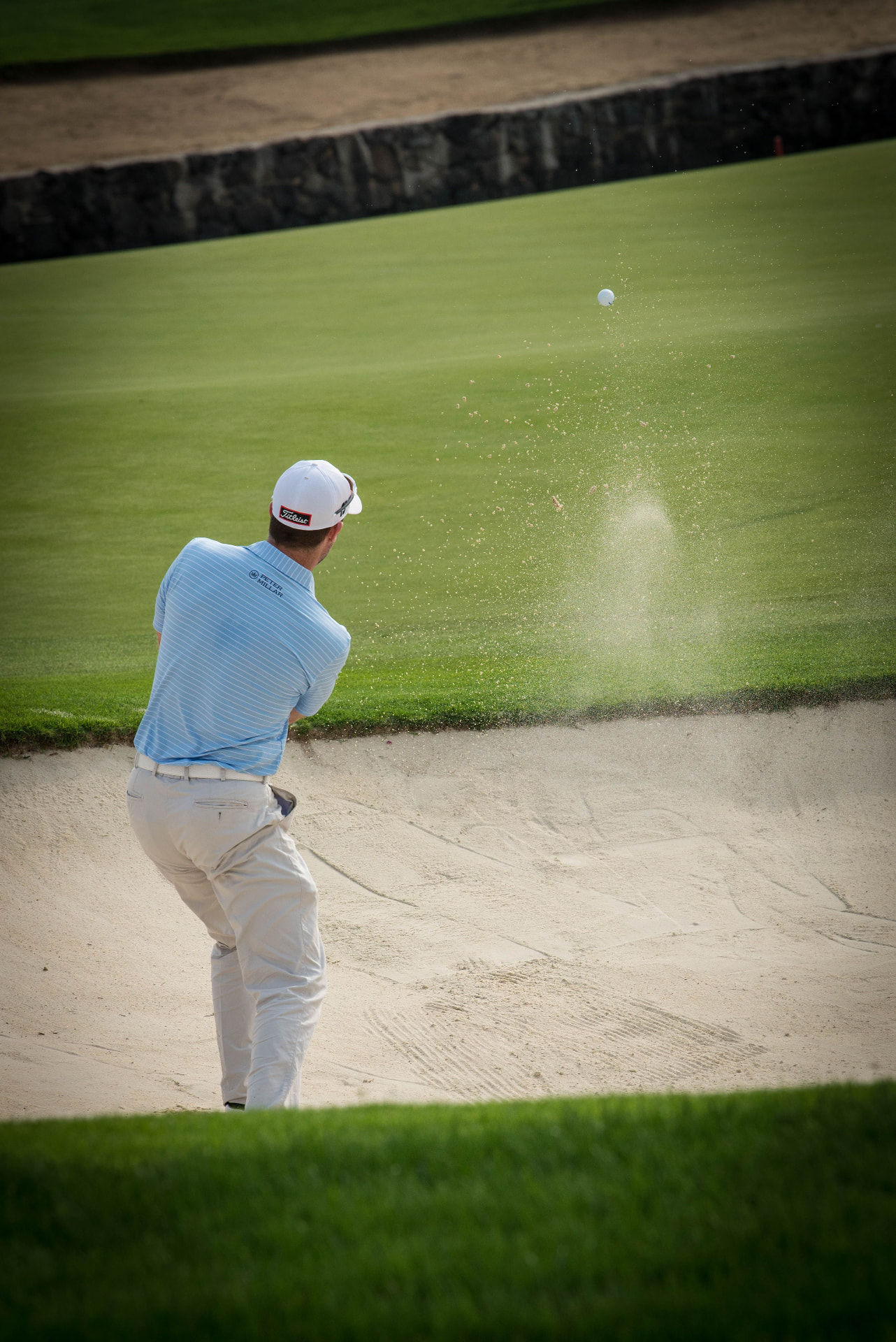
Inner elbow pain builds over weeks of repeated grip and impact loading, not from one bad shot.
Golfer''s elbow has almost nothing to do with golf for most of the people who get it. The name describes where the pain sits, not who causes it. Tennis players, padel players, weightlifters, and even office workers who type all day can develop the exact same condition.
The medical term is medial epicondylalgia. However it presents, the good news stays the same: with the right loading plan, this tendon problem responds well to treatment.
In this guide, you will find:
- What golfer''s elbow actually is
- What is happening in the tissue itself, with a deeper-dive option
- Common causes of golfer''s elbow in golfers and racquet players
- How we diagnose the root cause at Physio Flora
- Our physiotherapy treatment options for golfer''s elbow
- Three physiotherapist-approved exercises to start today
- Answers to the questions our patients ask most
What is golfer''s elbow?
Golfer''s elbow is pain and tenderness on the inside of the elbow, where the forearm''s flexor tendons attach to the bone. Doctors call it medial epicondylalgia, and it belongs to the same injury family as tennis elbow.
The key difference is location. Tennis elbow, which we also see often as padel elbow, affects the outside of the joint. Golfer''s elbow affects the inside. As a result, the two conditions need slightly different assessment and loading strategies, even though they share a similar cause.
Pain typically builds gradually rather than appearing after one bad swing. Gripping, shaking hands, or turning a doorknob can all become uncomfortable once the tendon is irritated.
Deep dive
Go deeper: the tissue science
This section goes deeper into the physiology for readers who want it. Skip ahead to "Common causes of golfer''s elbow" if you would rather get straight to the practical guidance.
The tissue involved is the common flexor-pronator tendon, a shared attachment point where several forearm muscles, including flexor carpi radialis and pronator teres, anchor onto the medial epicondyle of the humerus. This tendon lets you flex your wrist and rotate your forearm with force. A golf swing, a topspin forehand, or a heavy grip repeats that exact motion hundreds of times a session.
At a tissue level, repeated loading beyond what the tendon can recover from causes microscopic tears in the collagen fibres. Over time, the tendon responds not with classic inflammation but with disorganised, poorly aligned collagen and small areas of abnormal blood vessel growth. This process is called tendinosis rather than tendinitis, and it explains why anti-inflammatory approaches alone often fall short for longstanding cases.
Healing follows three overlapping phases. In an acute flare, the inflammatory phase runs roughly zero to five days, bringing swelling and sharp pain around the tendon. The proliferative phase follows, from around five days to six weeks, as the body lays down new but disorganised collagen. Remodelling then continues from six weeks out to twelve months or longer, as that collagen slowly realigns along the direction of load.
Chronic golfer''s elbow behaves differently from a fresh strain. Because the tendon has already undergone degenerative changes, there is less active inflammation to calm down. Instead, there is more need for structured, progressive loading to rebuild tendon capacity. This is why a tendon that has hurt for six months needs a different plan than one that started hurting last week.
Common causes of golfer''s elbow in golfers and racquet players
Several repetitive movement patterns place extra strain on the flexor-pronator tendon. In golf, the following technical faults are especially common:
- Hitting the ground before the ball, known as a fat shot, which sends a sudden shock through the wrist and forearm
- Gripping the club too tightly throughout the swing
- An early wrist release, sometimes called a flip, at impact
- A sharp increase in practice volume after time away from the game
In racquet sports, similar demands appear in different forms. A heavy topspin forehand loads the same tendon repeatedly. A two-handed backhand, common in both tennis and padel, adds further strain on the trailing arm. In addition, weightlifting and any job involving repeated gripping can trigger the same pattern.
Because the cause is almost always cumulative, symptoms usually build over weeks rather than appearing from a single shot or swing.
How we diagnose the root cause at Physio Flora
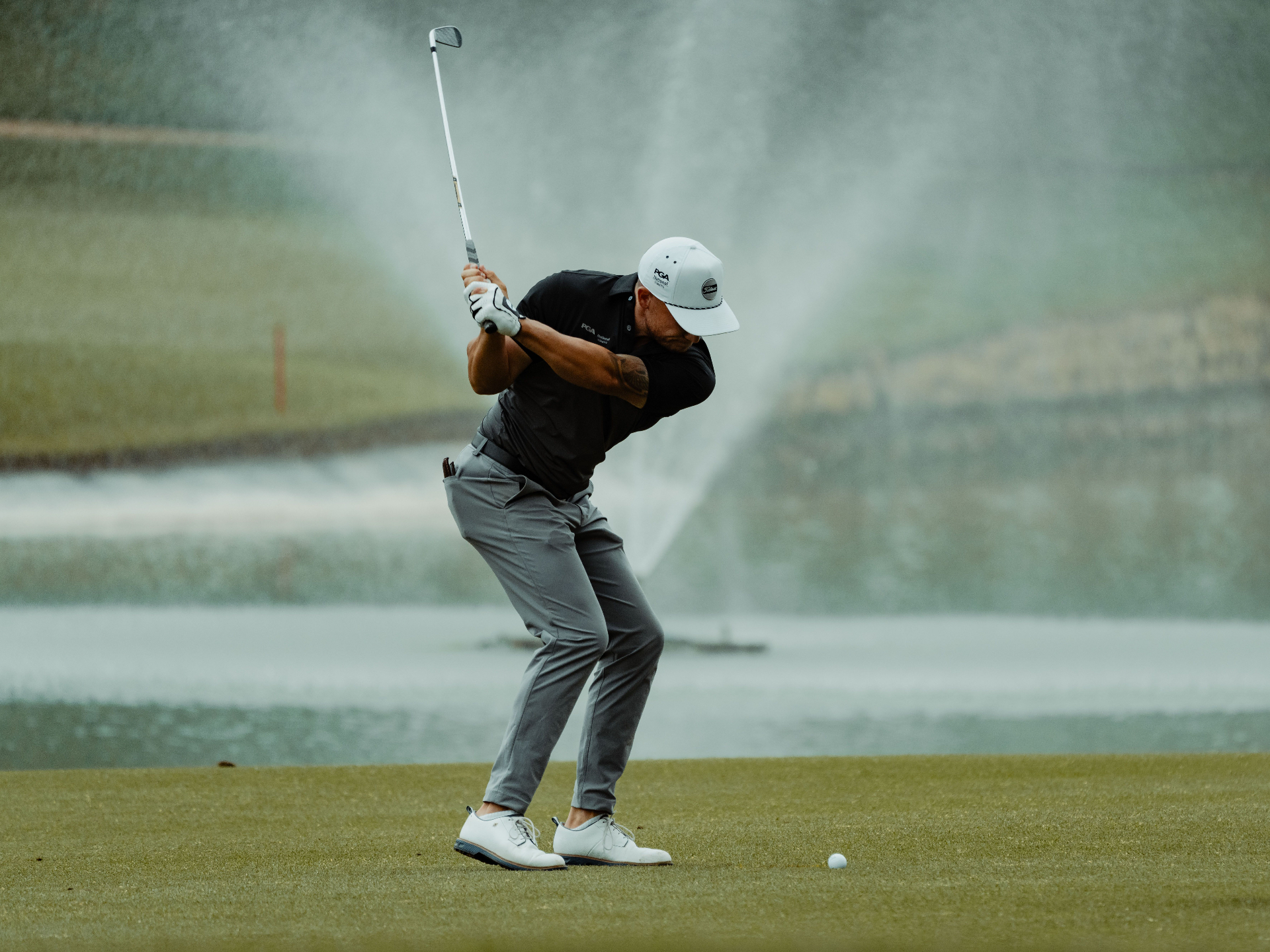 Screening the whole chain — grip, wrist, forearm, shoulder and neck — shows why the elbow is the part that hurts.
An accurate diagnosis matters because elbow pain does not always originate in the elbow. Our assessment typically includes:
- Palpation of the medial epicondyle to confirm the exact site of tenderness
- Resisted wrist flexion and forearm pronation tests to reproduce your symptoms
- Grip strength testing, compared side to side
- Screening for ulnar nerve involvement, since the nerve runs directly behind the medial epicondyle and can mimic or worsen tendon symptoms
- A check of neck and shoulder mobility, because referred pain from the cervical spine can present as elbow pain
This thorough process matters because treating a nerve irritation as a tendon problem, or the reverse, delays recovery. Getting the diagnosis right the first time saves weeks of frustration.
Our physiotherapy treatment options for golfer''s elbow
Treatment at Physio Flora is matched to how irritated the tendon is and how long you have been dealing with it.
Manual therapy and Mulligan mobilisation. Mobilisation with movement techniques can reduce pain during the very first session. This often allows loading exercises to start sooner rather than later.
Dry needling. Targeted needling of the flexor-pronator muscle mass helps release the tightness that builds up around an irritated tendon and can improve local blood flow.
Progressive loading programme. Isometric holds, followed by eccentric and then concentric strengthening, rebuild the tendon''s capacity to handle load. This structured progression is the single most evidence-supported treatment for tendinosis.
Shockwave therapy. For golfer''s elbow that has become chronic and has not responded to rest, shockwave therapy stimulates the tendon''s own repair process. It is often the turning point for players who have been struggling for months.
Sports massage. Releasing tension through the forearm flexors and upper arm supports the other treatments and improves comfort between sessions.
Return-to-golf and return-to-court coaching. Using an EXOS-informed performance framework, we rebuild grip strength and forearm endurance. Alongside this, we guide a graded return to full swings or full-pace rallies, so the tendon is ready before you are. You can see the full range on our services page, and golfers can add a TPI golf movement screening to address the swing pattern behind the problem.
Three physiotherapist-approved exercises to start today
Try these gently, and stop if you feel sharp pain rather than mild tension.
- Isometric wrist flexion hold. Rest your forearm on a table, palm facing up. Push your palm gently upward against your other hand''s resistance and hold for thirty to forty-five seconds. Repeat four times. This calms pain without straining the tendon further.
- Eccentric wrist curls. Hold a light dumbbell with your palm facing up and your forearm supported on a table or your knee. Use your other hand to lift the weight, then lower it slowly over three to five seconds under control. Two to three sets of twelve to fifteen repetitions build tendon capacity over time.
- Forearm pronation and supination stretch. With your elbow bent to ninety degrees, slowly rotate your palm up and down, as if turning a doorknob in both directions. This restores the rotation the flexor-pronator group needs for a full, pain-free swing or stroke.
If any exercise sharply increases your pain, stop and book an assessment before continuing.
Answers to the questions our patients ask most
Is golfer''s elbow only caused by golf?
No. Golf accounts for a minority of cases we see. Racquet sports, weightlifting, and repetitive manual work cause the same condition just as often.
How long does golfer''s elbow take to heal?
Mild cases often settle within four to six weeks with the right loading programme. Chronic cases that have lasted several months typically need three to six months of structured rehabilitation, because the tendon tissue itself has changed and needs time to remodel.
Can I keep playing golf or tennis with golfer''s elbow?
Often yes, with modification. We usually recommend adjusting grip pressure, reducing volume, and continuing supervised loading exercises rather than complete rest, since some controlled loading actually speeds tendon recovery.
What is the difference between golfer''s elbow and tennis elbow?
Both are tendinopathies affecting the elbow, but golfer''s elbow affects the inside of the joint while tennis elbow, including padel elbow, affects the outside. The rehabilitation principles are similar, though the specific exercises differ.
Do I need a scan or an injection?
Most cases are diagnosed through clinical assessment alone, without imaging. Injections are rarely a first-line treatment, since they can weaken tendon tissue further if used repeatedly. We reserve imaging for cases that do not respond as expected to conservative treatment.
Ready to fix the inner elbow pain properly?
Golfer''s elbow does not have to end your season, and it rarely requires you to give up your sport for good.
At Physio Flora, we combine thorough clinical assessment with evidence-based treatment and a genuine understanding of an active lifestyle, wherever it is lived. We treat golfers and racquet players from Calahonda, Marbella, Mijas, Fuengirola and across the coast, and the same tendon-loading thinking applies to related problems such as Achilles tendinopathy.
No referral needed. Consultations in English, Dutch, German and Spanish. Same-week appointments available.
Your grip connects you to your game. Protect it, and it will keep working for you.