
10 August 2026 · Flora Muijzer · 8 min read
Groin strain: why tennis and padel players get this injury and how physiotherapy speeds recovery
Groin or adductor strain from tennis or padel? Physio Flora offers expert diagnosis, dry needling and staged rehab in Marbella and Riviera del Sol to get you back on court faster.
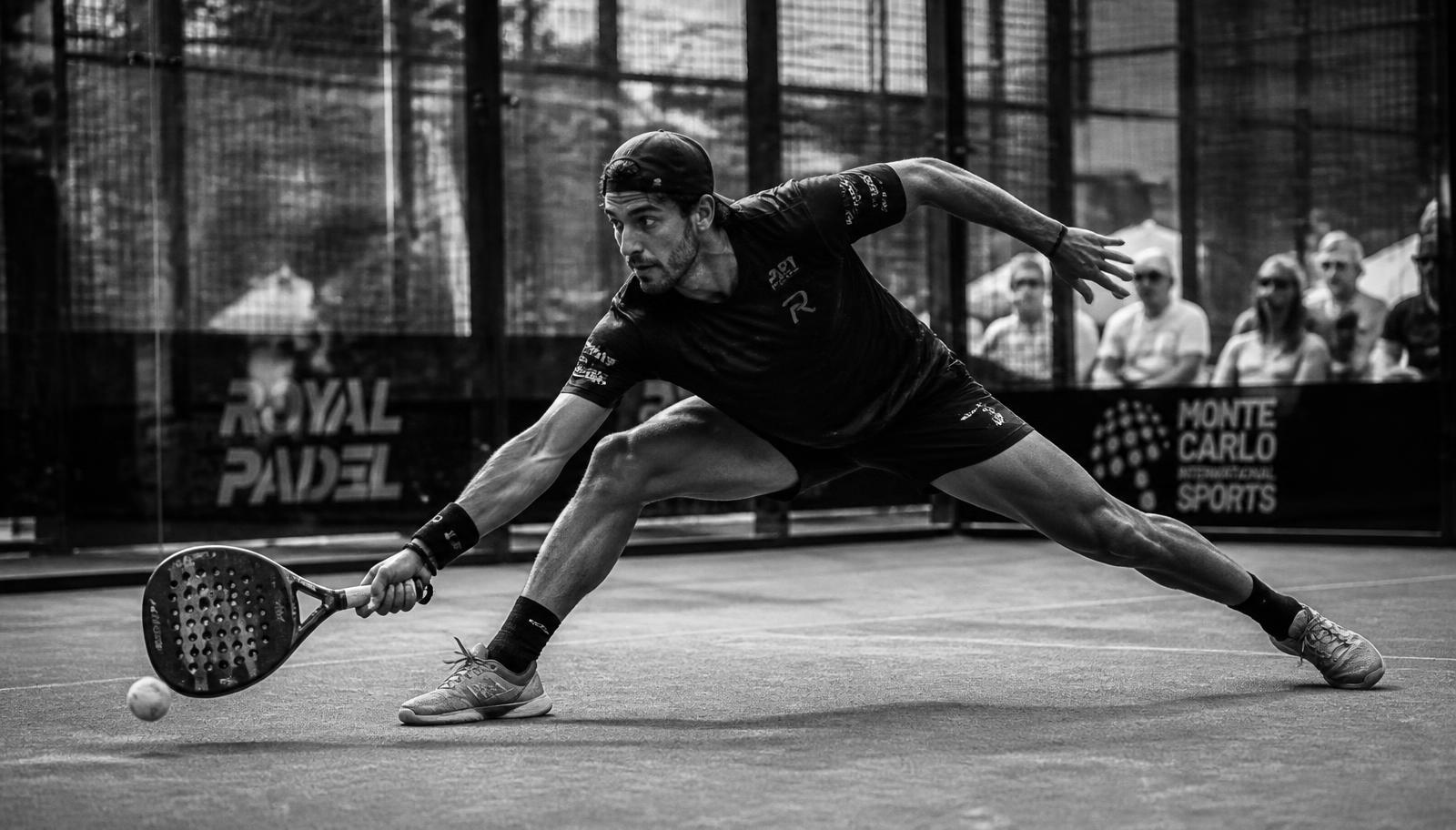
The wide lateral lunge is what makes padel and tennis so addictive — and what puts the adductors under the most strain.
Groin and hip complaints are among the most frequent lower-limb injuries in competitive racket sport, and adductor strains sit near the top of that list. In padel, the same movement, a fast lateral lunge to reach a wide ball, produces the exact same injury.
A groin strain rarely announces itself with one dramatic moment. More often, it starts as tightness after matches, then progresses into a sharp pull during a sprint or a lunge that finally stops you mid-point.
In this guide, you will find:
- What a groin strain actually is
- What is happening in the muscle tissue itself, with a deeper-dive option
- Common causes of groin strain in tennis and padel players
- How we diagnose the root cause at Physio Flora
- Our physiotherapy treatment options for groin strain
- Three physiotherapist-approved exercises to start today
- Answers to the questions our patients ask most
What is a groin strain?
A groin strain, also called an adductor strain, is damage to one or more of the muscles that run along the inner thigh. These muscles pull the leg toward the midline of the body, a movement called adduction.
In tennis and padel, this muscle group works constantly. It controls lateral lunges, decelerates sideways movement, and stabilises the hip during rapid direction changes. Because of this repeated demand, the adductors are particularly vulnerable to overload, in much the same way the hamstrings are during summer padel and tennis.
Groin strains are graded by severity. Grade I involves a small number of muscle fibres and causes mild discomfort. Grade II is a partial tear, with noticeable pain, swelling, and weakness. Grade III is a complete rupture, which is rare but serious, and usually causes sudden, severe pain with an inability to continue playing.
Deep dive
Go deeper: the tissue science
This section goes deeper into the physiology for readers who want it. Skip ahead to "Common causes of groin strain in tennis and padel players" if you would rather get straight to the practical guidance.
The adductor group consists of several muscles, including adductor longus, adductor brevis, and gracilis, along with the tendons that anchor them to the pelvis. Most groin strains occur at the myotendinous junction, the point where muscle fibres transition into tendon. This zone is mechanically weaker than the muscle belly itself, which is why it fails first under sudden, forceful stretch.
At the point of injury, muscle fibres tear to varying degrees, and small blood vessels rupture alongside them. This triggers the inflammatory phase, which typically runs from day zero to around day five. Swelling, localised pain, and reduced strength are expected during this window, as the body clears damaged tissue and begins laying down repair cells.
The proliferative phase follows, usually from day five to around three to four weeks for muscle tissue. New collagen fibres form across the tear, but this scar tissue is initially disorganised and structurally weaker than healthy muscle. Loading it too aggressively here risks re-tearing the same site, which is a common setback in athletes who return before this phase completes.
The remodelling phase then continues from roughly three weeks to three months, sometimes longer for higher-grade strains or injuries at the myotendinous junction specifically. During this phase, collagen fibres reorganise and align along the direction of load, gradually restoring tensile strength. Because the myotendinous junction behaves somewhat like tendon tissue, healing here tends to run slightly longer than a strain in the middle of the muscle belly.
Chronic or recurrent adductor injuries behave differently again. Repeated minor strains without full rehabilitation can lead to adductor tendinopathy, a degenerative overuse condition rather than an acute tear. This distinction matters, because tendinopathy responds better to progressive loading than to rest, unlike a fresh acute strain — the same principle we apply in Achilles tendinopathy.
Common causes of groin strain in tennis and padel players
Several patterns show up repeatedly in patients who present with adductor strains.
Rapid change of direction. Both tennis and padel demand sudden lateral movement to reach wide shots. This eccentric loading, where the adductor lengthens under tension, is the most common mechanism of injury.
Insufficient warm-up. Cold, unprepared adductor muscles have less capacity to absorb the sudden stretch of a lunge. As a result, injury risk rises noticeably in the first few points of a match.
Muscle fatigue. Adductor strength and control both decline as a match progresses. Because of this, injuries cluster more heavily in the second half of long matches or tournaments.
Previous groin injury. A history of adductor strain is the single strongest risk factor for a future one, particularly when the muscle was not fully rehabilitated the first time.
Weak or imbalanced hip muscles. Reduced adductor strength relative to the opposing abductor muscles changes how load is distributed through the hip during lateral movement.
Playing surface and footwear. Padel has grown quickly across this region, and its enclosed court and specific footing demands place particular stress on the adductors during split-step recovery, especially for players new to the sport. The same pattern drives padel elbow in players who ramp up too fast.
How we diagnose the root cause at Physio Flora
An accurate diagnosis starts with a detailed history. We ask when the pain began, what movement triggered it, and how it has behaved since.
Physical assessment then examines strength, flexibility, and pain response through resisted adduction testing, palpation along the muscle and tendon, and functional movement screening. This helps us grade the severity of the strain and rule out related conditions, such as hip labral tears or pubic-related groin pain, which can present with similar symptoms but need a different treatment approach.
In some cases, we refer for diagnostic imaging, particularly with higher-grade strains or when symptoms do not follow the expected recovery pattern. Where a broader medical work-up is useful, we coordinate with a sports physician. However, most groin strains can be assessed clinically without imaging.
Our physiotherapy treatment options for groin strain
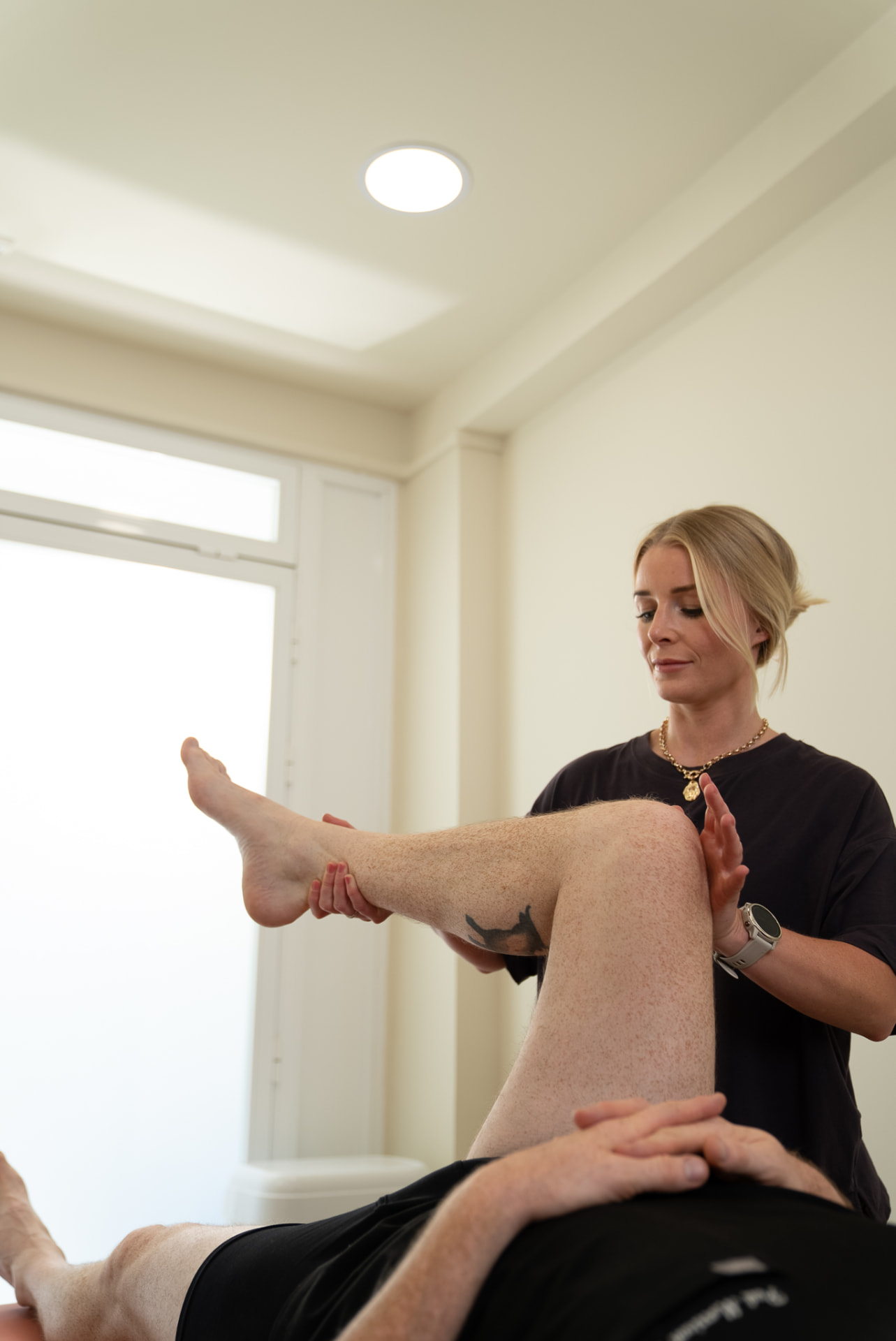 Hip mobility and resisted muscle testing tell us exactly which part of the adductor group is involved, and how much load it can take.
Treatment is staged to match the tissue healing timeline described above, rather than applied generically regardless of how long ago the injury occurred.
Manual therapy. Hands-on techniques address any restrictions in the hip joint or surrounding soft tissue that may be contributing to abnormal load through the adductors.
Dry needling. This targets tight, overactive muscle tissue around the strain site and along the kinetic chain. It is particularly effective for the muscle guarding and referred tightness that often follows an adductor injury, and it is a treatment far fewer clinics on the coast offer as standard.
Sports massage. Used at the right stage of recovery, this supports circulation, reduces excessive scar tissue formation, and helps restore normal muscle length and function.
Progressive loading programme. This is the cornerstone of adductor rehabilitation. We introduce controlled strengthening, often starting with isometric holds before progressing to eccentric exercises such as the Copenhagen adduction exercise, matched precisely to where the tissue sits in its healing timeline.
Return-to-sport testing. Before clearing an athlete to return to tennis or padel, we assess strength symmetry, movement control under fatigue, and sport-specific lateral movement, drawing on EXOS performance methodology to confirm the body is genuinely ready, not just pain-free. You can see the full range on our services page.
Three physiotherapist-approved exercises to start today
These general examples suit early to mid-stage recovery. Always get a physiotherapy assessment first, since starting the wrong exercise at the wrong stage can slow healing.
- Isometric adductor squeeze. Sit with a soft ball or cushion between your knees. Squeeze gently for ten seconds, then release. Repeat eight to ten times. This builds strength without moving the injured tissue through range, which suits the early stages of recovery.
- Standing hip adduction. Using a light resistance band anchored at ankle height, slowly pull the injured leg across the body, then return with control. Perform two to three sets of twelve, focusing on smooth, controlled movement rather than speed.
- Side-lying leg lifts. Lying on your uninjured side, lift the top leg slightly, then lower the underneath leg up to meet it, engaging the inner thigh throughout. This challenges the adductors in a longer range as recovery progresses.
Stop any exercise that causes sharp pain, and check with your physiotherapist before increasing intensity.
Answers to the questions our patients ask most
How long does a groin strain take to heal?
A mild Grade I strain often improves within one to two weeks. A Grade II strain typically needs four to six weeks of structured rehabilitation. Grade III ruptures can take three months or longer, and occasionally require surgical consultation.
Can I keep playing tennis or padel with a groin strain?
Continuing to play through adductor pain usually makes the injury worse and extends recovery. Because reinjury risk is high with this condition, a short break combined with proper rehabilitation is almost always faster in the long run than pushing through.
Do groin strains keep coming back?
They can, particularly if the loading phase of rehabilitation is skipped. This is why we build a full strength programme, not just pain relief, into every recovery plan — the same reasoning behind our approach to recurring lower back pain.
Is heat or ice better for a groin strain?
Ice is generally more appropriate in the first few days, when inflammation and swelling are highest. Heat becomes more useful later, once the tissue moves into active loading and mobility work.
Should I stretch a strained groin?
Gentle, pain-free stretching has a role later in recovery, but aggressive stretching too early can aggravate the healing tissue. Your physiotherapist will guide exactly when and how to introduce it.
Ready to get back on court properly?
A groin strain does not have to sideline a full season of tennis or padel.
At Physio Flora, we combine thorough clinical assessment with evidence-based treatment and a genuine understanding of an active lifestyle, wherever it is lived. We see racket-sport players from Riviera del Sol, Marbella, Mijas, Fuengirola, Estepona and across the coast, and the same load-management principles apply whether you play padel or ride the climbs behind them, as with cyclist's knee.
No referral needed. Consultations in English, Dutch, German and Spanish. Same-week appointments available.
Get back on court with strength you can trust, not just strapping that hides the problem.