
3 August 2026 · Flora Muijzer · 10 min read
Post-surgical rehab: why recovery from hip or knee replacement starts before the operation
Recovering from hip or knee replacement in Marbella or Mijas? Physio Flora offers pre and post-surgical rehab to help you recover faster and safer.
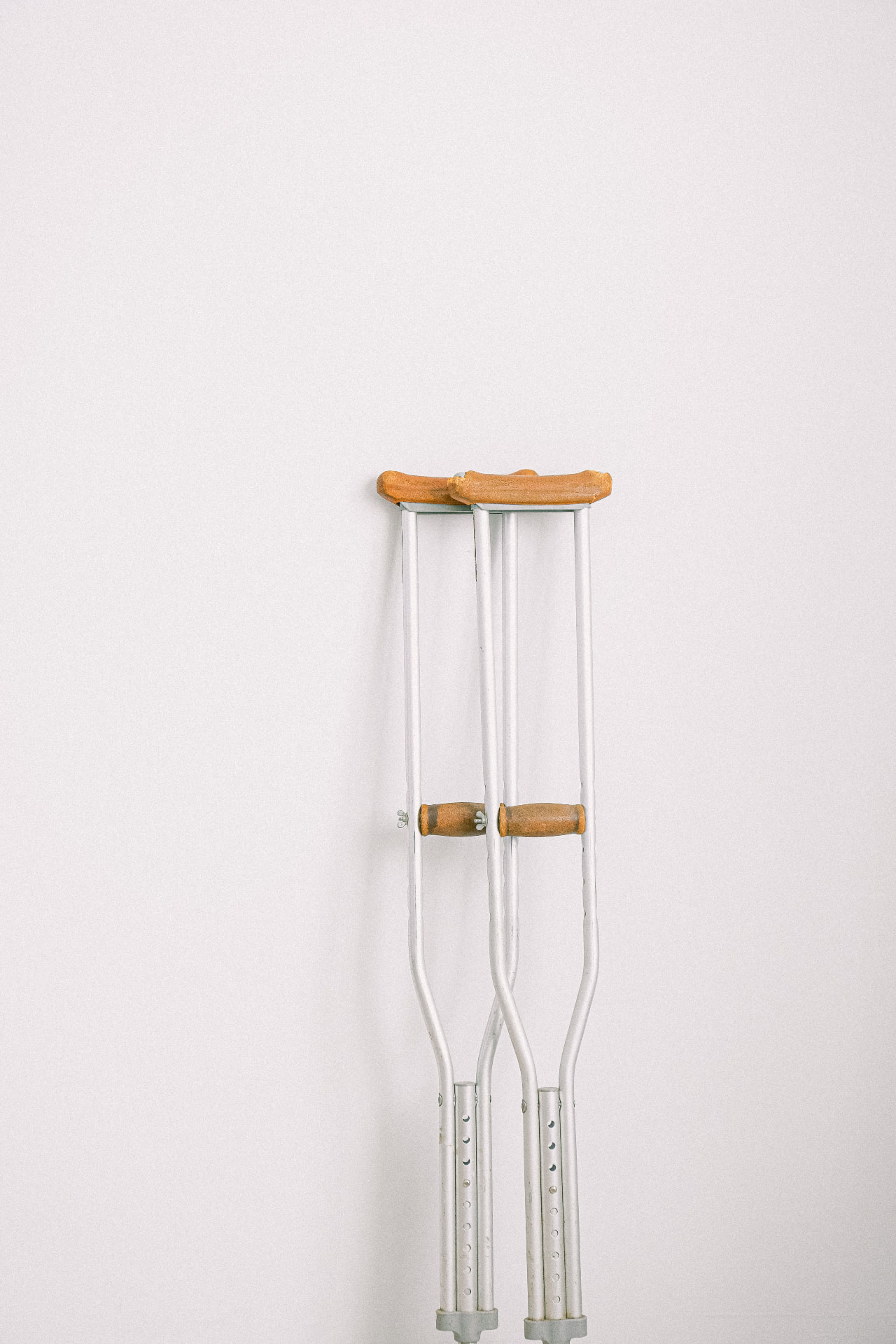
Crutches are a temporary tool, not a destination — how quickly you put them away depends largely on the work done before and after surgery.
Recovery from hip or knee replacement surgery does not begin when you wake up from anaesthesia. It begins weeks earlier, in the physiotherapy room, with the muscles and movement patterns that will carry you through the first difficult days.
Patients who arrive at surgery with stronger legs and better mobility tend to leave hospital sooner and regain independence faster. The operation matters enormously, of course. However, what happens before and after it, in physiotherapy, often decides how quickly you actually get your life back.
In this guide, you will find:
- What pre and post-surgical rehab actually involves
- What is happening in the tissue, from bone to graft
- Why pre-surgical conditioning changes your recovery timeline
- The phases of recovery after joint replacement or sports surgery
- Common mistakes that slow recovery down
- Why coordinated care between your surgeon and physiotherapist matters
- Where a sports physician can add value before and after surgery
- Three physiotherapist-guided movements for early recovery
- Answers to the questions our patients ask most
What pre and post-surgical rehab actually involves
Post-surgical rehab is not one generic exercise sheet handed out at discharge. It is a structured, staged programme built around the specific surgery you have had, your starting fitness, and your goals afterward.
This applies across several types of surgery: hip and knee replacement, ACL and other ligament reconstruction, shoulder repair, meniscus surgery, and spinal procedures. Each one carries its own healing timeline and its own restrictions in the early weeks. As a result, no two rehab plans look exactly the same, even for two patients who had the same operation.
Pre-surgical rehab, often called prehab, is the less well known half of this picture. It focuses on building strength and mobility in the weeks before surgery, so your body has more reserve to draw on afterward.
Deep dive
Go deeper: the tissue science
This section goes deeper into the physiology for readers who want it. Skip ahead to "Why pre-surgical conditioning changes your recovery timeline" if you would rather get straight to the practical guidance.
Joint replacement surgery involves several tissues healing at once: bone, the joint capsule, and the muscles and tendons that were incised or moved aside during the surgical approach. Each heals on its own timeline, which is why a single generic recovery date rarely applies.
Bone healing around a prosthesis relies on a process called osseointegration, where new bone gradually bonds to the implant surface. This bonding begins within days of surgery, but usually needs six to twelve weeks to reach a stable level of fixation. Full bone remodelling around the implant continues for up to a year.
Soft tissue, meaning muscle, tendon, and joint capsule, heals through three overlapping phases. The inflammatory phase runs roughly from day zero to day five, when swelling and localised pain increase as blood flow rises to support repair. The proliferative phase follows, from around day five to six weeks, during which new collagen tissue forms but remains structurally fragile. The remodelling phase then continues from roughly six weeks to twelve months or longer, as that new tissue reorganises and strengthens along the lines of load placed on it through graded exercise.
Ligament reconstructions, such as ACL surgery, add another layer. The graft used to replace the ligament undergoes a process called ligamentisation, where the graft tissue gradually converts toward ligament-like structure and blood supply. This conversion typically takes six to twelve months, which is one reason return-to-sport clearance is usually withheld until at least nine months after surgery, even when the knee already feels strong.
This is exactly why exercise progression in rehab follows a timeline, rather than being driven purely by how the joint feels day to day. Feeling strong at eight weeks does not mean the tissue underneath has finished remodelling.
Why pre-surgical conditioning changes your recovery timeline
Muscle strength around a joint scheduled for surgery typically declines in the months leading up to the operation, simply because pain and reduced function limit normal activity. Therefore, many patients enter surgery already weaker than they were a year earlier.
Prehab addresses this directly. A structured programme of targeted strengthening, usually four to six weeks before surgery, builds a stronger baseline for the muscles that support the joint. In addition, it teaches movement patterns, such as safe ways to sit, stand, and walk with mobility aids, that patients will rely on immediately after the operation.
Research consistently links stronger pre-surgical conditioning with shorter hospital stays and faster return to independent walking. Because the body has more capacity to draw on, it copes better with the physical stress of surgery itself.
The phases of recovery after joint replacement or sports surgery
Phase one: immediate post-operative care, days one to fourteen. The priority here is managing swelling and pain, protecting the surgical site, and restoring safe basic movement, such as walking short distances and moving safely in and out of bed. Gentle, guided exercise begins early, often within a day or two of surgery, because controlled movement supports healing far better than complete rest.
Phase two: early mobility and range of motion, weeks two to six. Once the initial healing has settled, we focus on restoring full joint movement and beginning light strengthening. This phase determines much of your long-term flexibility, so consistency here matters more than intensity.
Phase three: progressive strengthening, weeks six to twelve. Strength work increases steadily as tissue healing progresses. For hip and knee replacement patients, this is where walking without aids, managing stairs confidently, and returning to daily tasks typically happen.
Phase four: return to activity or sport, three months onward. For active patients, this phase rebuilds the specific capacity needed for golf, tennis, padel, cycling, or simply keeping up with day-to-day life without hesitation. Timelines vary considerably by surgery type and individual healing, so we set milestones based on function, not the calendar alone.
Common mistakes that slow recovery down
Several patterns show up repeatedly in patients who struggle more than expected during recovery.
- Resting too much, too long. Fear of causing damage leads some patients to move far less than is actually safe. Unfortunately, prolonged inactivity causes stiffness and muscle loss that then need extra weeks to reverse.
- Doing too much, too soon. The opposite mistake also happens often, particularly among previously active patients keen to return to sport. Pushing past what the healing tissue can handle risks setbacks that delay overall progress.
- Skipping the prehab phase entirely. Patients who go straight from diagnosis to surgery, without any conditioning beforehand, generally take longer to regain independence afterward.
- Assuming pain always means damage. Some post-surgical discomfort during appropriate exercise is normal and expected. However, distinguishing this from pain that signals a genuine problem requires professional guidance, not guesswork.
- Stopping physiotherapy once walking feels comfortable. Comfortable walking is an early milestone, not the finish line. Full strength, balance, and confidence typically take considerably longer to rebuild, in line with the remodelling timelines described above.
Why coordinated care between your surgeon and physiotherapist matters
A successful surgical outcome depends on close communication between the person who performs the operation and the person who guides your recovery afterward.
We work alongside skilled orthopedic surgeons, including Dr. Joris van der Lugt, an orthopedic surgeon based in Marbella and Estepona who specialises in hip and knee replacement, including anterior-approach and robotic-assisted techniques. Surgeons like Dr. van der Lugt bring the surgical precision. Physiotherapists then translate that surgical outcome into function: walking, climbing stairs, returning to golf or padel, and everything in between.
When your surgeon and physiotherapist understand each other's approach, your rehab plan reflects exactly what was done in the operating theatre, rather than a generic protocol applied to every patient regardless of surgical technique.
Where a sports physician can add value before and after surgery
Surgery and physiotherapy are essential parts of the recovery journey, but there is another important piece of the puzzle: making sure the patient is medically and physically ready for surgery, and has a clear plan for returning to an active life afterward. This is where a sports physician can play an important role.
1. Medical and pre-operative assessment. Before surgery, a sports physician can assess your overall health, cardiovascular fitness, current physical capacity, and any medical factors that could influence your recovery. A comprehensive pre-operative screening helps identify potential risks and provides a clear starting point from which to build your rehabilitation plan.
2. Preparing your body for surgery. Prehabilitation is not only about strengthening the muscles around the affected joint. It is also about optimising your overall physical condition, managing lifestyle factors, and making sure you enter surgery as fit and healthy as possible. As a sports physician, Dr. Mirjam Steunebrink can help coordinate this process with your surgeon and physiotherapist, ensuring that your preparation is medically appropriate and tailored to your individual situation.
3. Supporting your return to an active life. Recovery does not end when you can walk comfortably or return to daily activities. For active patients, the ultimate goal may be returning to cycling, swimming, running, golf, tennis, padel, or other sports. A sports physician can help assess whether your body is ready for the demands of your chosen activity, and guide the progression from rehabilitation to training and performance.
Dr. Mirjam Steunebrink of Costa Sports Medicine uses a holistic approach to recovery, combining medical assessment with exercise, training, lifestyle, and performance guidance. Her guest article on what sports medicine actually is explains the approach in more detail. The aim is not simply to help you recover from surgery, but to help you return stronger, healthier, and with confidence to the activities that matter to you.
Three physiotherapist-guided movements for early recovery
These are general examples of the type of gentle movement often introduced early after joint replacement surgery. Always follow your surgeon and physiotherapist's specific instructions for your procedure, since timing varies by surgery type.
1. Ankle pumps. Lying or sitting, point your toes up towards your shin, then down away from it, repeating slowly for one to two minutes. This supports circulation in the legs during the early days after surgery, when movement is still limited.
2. Quad sets. Sitting with your leg straight, gently tighten the muscle on the front of your thigh, hold for five seconds, then release. Repeat ten times. This maintains muscle activation around the knee without stressing the surgical site.
3. Heel slides. Lying on your back, slowly slide your heel towards your buttocks, bending the knee within a comfortable range, then straighten again. Repeat gently, ten times, to begin restoring knee movement.
If any movement causes sharp pain or noticeably increased swelling, stop and contact your physiotherapist or surgeon before continuing.
Answers to the questions our patients ask most
When should I start physiotherapy before surgery?
Most prehab programmes begin four to six weeks before the operation date, though this varies depending on your current fitness and the surgery planned.
How soon after surgery does physiotherapy start?
Often within one to two days, particularly after hip and knee replacement. Early, gentle movement is one of the strongest predictors of a smooth recovery.
How long until I can drive again?
This depends on the surgery, your leg strength, and your surgeon's specific clearance. Many hip and knee replacement patients return to driving between four and six weeks, though this always needs individual confirmation.
Will I need physiotherapy for months?
Often, yes, though the intensity decreases considerably over time. Early sessions tend to be frequent, while later phases focus on independent strengthening with periodic check-ins, matched to the tissue remodelling timeline described earlier.
Can physiotherapy help me avoid surgery altogether?
Sometimes. For some joint conditions, a structured physiotherapy programme delays or removes the need for surgery entirely. This is always worth exploring with an assessment first, as it often is with ongoing knee pain or persistent heel pain.
Ready to prepare properly, before and after surgery?
A good surgical outcome and a good recovery are two different achievements, and both need proper attention.
At Physio Flora, we combine thorough clinical assessment with evidence-based treatment and a genuine understanding of an active lifestyle, wherever it is lived. We see patients from Riviera del Sol, Marbella, Fuengirola, Estepona, Benalmádena, Mijas, and across the region. Home visits are available on request for patients who need them in the early weeks after surgery.
No referral needed. Consultations in English, Dutch, German and Spanish. Same-week appointments available.
Your surgery gets you to the starting line. The right rehab is what gets you back to the life you had before.