
23 November 2026 · Flora Muijzer · 6 min read
Trail running and hiking injuries: protecting your ankles and feet on uneven ground
Ankle sprain or foot pain from trail running or hiking? Physio Flora in Calahonda offers Mulligan therapy, balance training, and shockwave. Home visits in Marbella.
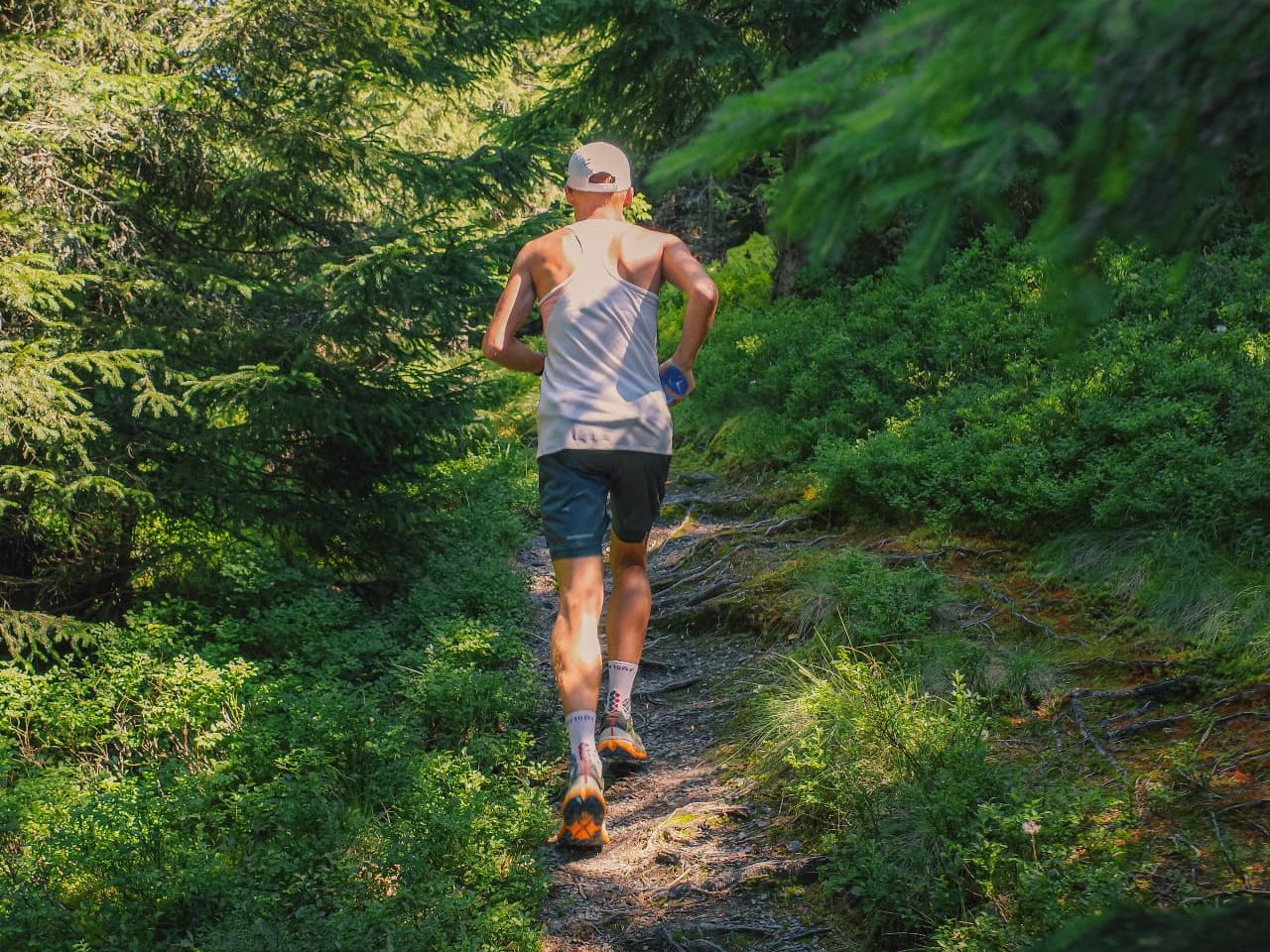
Why do ankle sprains happen on a trail you have walked a hundred times? The answer is rarely bad luck. Uneven ground asks your ankle and foot to make hundreds of tiny corrections every minute, and fatigue makes those corrections slower.
Trail runners and hikers face a different set of injuries from road runners. The good news is that most of them are preventable, and they respond well to targeted physiotherapy.
In this guide, you'll find:
- The most common ankle and foot injuries on trails
- What's happening in the tissue (with a deeper-dive option)
- Why uneven terrain, descents, and footwear cause problems
- How we diagnose the root cause at Physio Flora
- Our physiotherapy treatment options for trail and hiking injuries
- Three physiotherapist-approved exercises to start today
- Answers to the questions our patients ask most
What are the most common trail running and hiking injuries?
Four problems account for most ankle and foot complaints on trails.
Lateral ankle sprains. The ankle rolls outward on uneven ground and overstretches the ligaments on the outside. A sprain that is not fully rehabilitated often leads to repeated sprains.
Peroneal tendinopathy. The peroneal tendons run along the outside of the ankle and resist rolling. Constant micro-adjustments on uneven ground can irritate them. This causes pain behind the outer ankle bone, often worse when you start and settling as you warm up.
Metatarsal overload. The long bones of the forefoot take heavy load on rocky trails and steep descents. This can cause forefoot pain, and in some cases a stress reaction in the bone.
Top-of-foot pain. Tight laces, steep climbs, and long descents can irritate the extensor tendons on top of the foot.
Plantar fasciitis is also common among hikers. We cover it in a separate article.
Deep dive
Go deeper: the tissue science
This section goes deeper into the physiology for readers who want it. Skip ahead to "Why uneven terrain causes injury" if you'd rather get straight to the practical guidance.
Each injury involves a different tissue, and each heals at a different pace.
Ligaments connect bone to bone and stabilise the joint. They have a limited blood supply. A mild sprain often heals in two to six weeks, while a more severe one can need three months or longer. Importantly, ligaments also contain sensors that tell the brain where the ankle is in space. After a sprain, these sensors are disrupted, which is why balance training matters as much as strength.
Tendons transmit force from muscle to bone. Peroneal tendons are loaded repeatedly on uneven ground. When the load exceeds their capacity, collagen organisation breaks down and the tendon becomes sensitive. Tendons remodel slowly, so recovery usually takes eight to twelve weeks or more, and relies on progressive loading rather than rest.
Bone responds to stress by remodelling. When load rises faster than bone can adapt, a stress reaction can develop. This usually needs six to eight weeks of reduced loading.
Healing follows the usual phases: inflammation in the first days, repair over the following weeks, and remodelling for months. Chronic or repeated injuries behave differently, because the surrounding muscle control and balance are often affected as well.
Why uneven terrain causes injury
Several factors combine on the trail:
- Uneven ground, loose stones, and roots that demand fast ankle responses
- Fatigue late in a long run or hike, when balance reactions slow down
- Downhill sections, where each step loads the forefoot and ankle with several times body weight
- Worn or poorly fitted footwear, or shoes with too little grip or support
- A sudden jump in distance, elevation, or pack weight
- Previous ankle sprains, which reduce balance and stability
- Weak foot, calf, and hip muscles that cannot absorb the demands of the trail
The mountain trails inland from Mijas and Benahavís are a good example. Steep, rocky descents are demanding even for experienced walkers.
How we diagnose the root cause at Physio Flora
Foot and ankle pain has several possible sources, so assessment comes first. Our examination typically includes:
- A history of the trail type, footwear, load, and the moment symptoms began
- Ankle ligament and joint stability tests
- Palpation along the peroneal tendons, the forefoot bones, and the top of the foot
- Single-leg balance and hop tests, which show how well the ankle controls movement
- Calf, foot, and hip strength testing
- A review of footwear and running or walking mechanics
When a stress fracture or a significant ligament tear is suspected, we refer for imaging before progressing rehabilitation.
Our physiotherapy treatment options for trail and hiking injuries
Treatment depends on which tissue is injured.
Mulligan manual therapy. After an ankle sprain, the joint can become stuck in a slightly displaced position. Mulligan mobilisations restore normal glide and often improve movement immediately.
Balance and proprioception training. This is essential after any ankle injury. We progress from simple balance work to unstable surfaces and trail-specific movements.
Progressive strengthening. We build strength in the peroneals, calf, foot muscles, and hips. For tendon problems, this loading is the main driver of recovery.
Shockwave therapy. For stubborn peroneal or other tendon pain, shockwave can help stimulate tissue repair alongside exercise.
Dry needling. Targeted needling of the peroneals, calf, and foot muscles reduces protective tension and eases pain.
Sports massage. Soft tissue work through the calf and foot supports recovery after long days on the trail.
Sports performance coaching. EXOS-based coaching develops downhill technique, foot strike control, and single-leg stability, and builds a progressive plan for returning to longer distances.
Three physiotherapist-approved exercises to start today
Keep effort mild and pain low. Stop if you feel sharp pain.
-
Single-leg balance. Stand on one leg for 30 seconds near a wall. Progress by closing your eyes or standing on a folded towel. This retrains the ankle's position sense.
-
Short foot exercise. Sitting or standing, draw the ball of your foot toward your heel without curling the toes. Hold for five seconds and repeat ten times. This strengthens the arch muscles.
-
Resisted ankle eversion. Sit with a resistance band looped around your foot. Turn the foot outward slowly against the band. Do three sets of fifteen. This strengthens the peroneal muscles.
If symptoms persist for more than a week, book an assessment before returning to the trail.
Answers to the questions our patients ask most
Should I tape or brace my ankle for trails?
It can help in the early return phase. However, it works best alongside strength and balance training, not instead of it.
What shoes are best for trail running?
Choose a shoe with good grip, a secure fit, and enough cushioning for your terrain. Replace shoes when the tread or midsole wears out. A fitting that suits your foot shape matters more than any brand.
How long does an ankle sprain take to heal?
A mild sprain often takes two to six weeks. A more severe sprain can take three months or longer. Rehabilitation of balance continues after the pain has gone.
Why does the outside of my ankle hurt on downhills?
This is a common sign of peroneal tendon irritation. The tendons work hard to control sideways movement on descents.
Can I keep hiking with foot pain?
Mild symptoms can often be managed by adjusting distance and terrain. Pain that is sharp, localised on a bone, or worse at night needs assessment.
How do I prevent injuries on the trail?
Build distance gradually, strengthen your calves, feet, and hips, practise balance, and keep footwear in good condition.
Uneven ground will always ask a lot of your ankles. With the right preparation, they can answer.
At Physio Flora, we combine thorough clinical assessment with evidence-based treatment and a genuine understanding of an active lifestyle, wherever it's lived. No referral needed. Consultations available in English, Dutch, German and Spanish. Same-week appointments available.
Your feet connect you to every trail. Give them the strength and balance to keep going.
Physio Flora · English, Dutch, German and Spanish-speaking physiotherapy on the Costa del Sol · Specialising in ankle and foot injuries, trail running, and hiking rehabilitation
Read more about ankle sprains, plantar fasciitis and calf strains.